The power of Shakti – awakening the life energy within

The power of shakti – awakening the life energy within
How prana shakti, Kundalini kriya and the traditional wisdom of Himalayan Yoga reveal the creative power of life
Introduction – the power of shakti in everyday life
Shakti is the living force behind all existence. It is the energy through which life manifests, moves, grows and transforms. The ancient Vedic and yogic traditions viewed shakti not just as an idea practitioners should understand intellectually, but as a living reality they could experience through awareness, breath, movement, meditation and spiritual practice.
Every breath we take, every movement of the body, every thought that arises, and every transformation within nature expresses this fundamental life energy. Without shakti, nothing moves. Without this creative force, nothing can manifest.
Although shakti is traditionally personified as the Divine Mother in the Himalayan tradition, its yogic understanding is more than religious imagery. The scriptures view shakti as the universal creative power through which the unmanifest becomes manifest. It is present within every human being.
At the Vedic Yoga Centre, this understanding is central to our teachings. Our approach is based on guiding practitioners to recognise, cultivate, and harmonise the life energy already present within them.
Through traditional Hatha Yoga, pranayama, Kundalini kriya, meditation, mantra, Ayurveda and spiritual understanding, students gradually discover that the same energy which sustains the universe also sustains their individual existence.
The spiritual journey is therefore not about acquiring something new. It is about awakening to what has always been present.
What is shakti in the Vedic tradition?
The Sanskrit word shakti means power, energy, strength or capacity. It refers to the dynamic principle of existence: the power through which potential becomes expression.
A seed contains the potential to become a tree, but this requires some action in order to manifest. Similarly, the human being contains possibilities that remain dormant until the necessary energy, awareness and conditions become aligned. This is one way to understand shakti.
Traditional yogic philosophy often describes Shiva and Shakti as two inseparable principles. Shiva represents pure consciousness, the silent and unchanging foundation of existence. Shakti represents the dynamic power through which consciousness expresses itself.
Practitioners should not see them simply as two separate gods. Philosophically, they describe complementary aspects of one reality: stillness and movement, consciousness and manifestation. Without consciousness, energy has no direction. Without energy, consciousness remains unexpressed.
For the spiritual practitioner, this understanding has practical significance. Spiritual growth initially requires awareness, and then the energy through which awareness can influence daily life.
Consequently, the purpose of yoga is not simply to increase energy, but to bring the energy into harmony with consciousness. This requires raising the energy, which is achieved through the many varied yogic practices.
Prana shakti – the life force within every living being
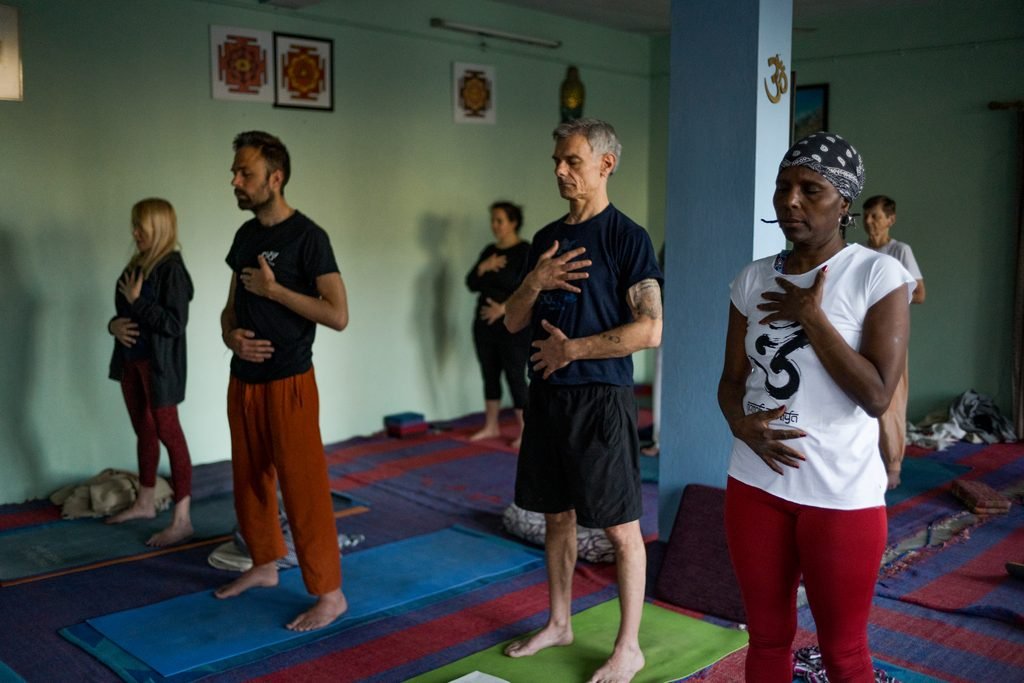
Individuals experience shakti through the movement of prana shakti, the vital life force.
Prana is often associated with breathing, but its yogic meaning is much broader. Breath is the principal expression and instrument of prana, but prana itself refers to the subtle energy that sustains life.
Traditional yogic teachings describe five principal movements of prana, known as the pancha prana vayus.
- Prana vayu: Associated with upward and inner movement, together with breathing.
- Apana vayu: Governs downward and outward movement, elimination and grounding.
- Samana vayu: Associated with digestion, assimilation and the balancing of energies.
- Udana vayu: Connected with creativity, expression and higher development.
- Vyana vayu: Governs circulation, distribution and integration throughout the body.
These are traditional yogic descriptions of subtle functions, rather than anatomical structures or scientifically established forms of energy.
When practitioners are able to balance these movements, they naturally experience greater stability, vitality and inner harmony. However, when emotional agitation, excessive activity, irregular habits or lack of awareness disturbs one’s energy flow, the individual experiences restlessness and disconnection.
This is why traditional yoga places such importance on disciplined daily practice. Through asana, pranayama, kriya and meditation, we learn to work consciously with the movements of prana rather than remaining governed by unconscious habits.
At Vedic Yoga Centre, we have woven this principle throughout our teachings. We do not regard yoga as a collection of isolated physical techniques. Each practice contributes towards a more harmonious relationship between body, breath, energy, mind and consciousness.
Kundalini shakti – the dormant potential of human consciousness
Among the most profound teachings of traditional yoga is the understanding of Kundalini shakti.
Kundalini is described as a dormant spiritual potential within the individual. Classical yogic symbolism represents this energy as a coiled serpent resting at the base of the spine, in the region associated with muladhara (root) chakra. This image is symbolic, representing the potential for transformation of human awareness.
Ordinarily, we direct most of our energy outward through the senses, desires, emotional reactions and constant mental activity. As a result, our attention becomes absorbed in life’s changing circumstances.
Kundalini yoga seeks to reverse this habitual outward movement. Through systematic practice, the practitioner gradually becomes able to direct attention inward, refining the movement of prana and developing greater awareness of the subtle dimensions of existence.
Traditional texts describe Kundalini awakening as ascending from the root chakra through the sushumna nadi, the central subtle energy channel, towards the highest chakra.
This represents the progressive integration of individual energy with higher consciousness.
However, Kundalini awakening should not be confused with unusual sensations, emotional excitement or dramatic physical experiences. Such experiences may have many explanations and are not reliable measures of spiritual development.
The true significance of Kundalini practice lies in the transformation of awareness, behaviour and understanding. A person may practise powerful techniques but still remain governed by anger, attachment or ego. In that case, the essential purpose of spiritual practice has not yet been fulfilled.
At Vedic Yoga Centre, we emphasise preparation, gradual development, self-observation and guidance by an experienced teacher.
The aim is not to force an awakening, but to establish the conditions through which spiritual growth can unfold naturally.
Kundalini kriya yoga – working consciously with shakti
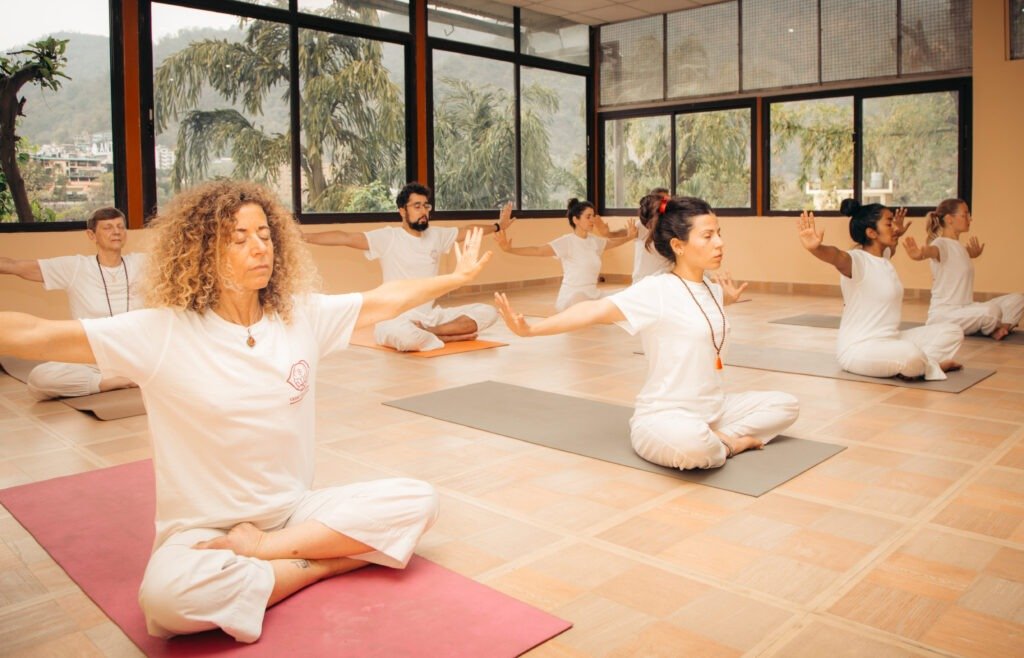
Kundalini kriya yoga holds a particularly important place in the teachings of Vedic Yoga Centre. The Sanskrit word kriya means action. In spiritual practice, however, it refers to conscious, purposeful action undertaken to influence the movement of energy and awareness.
Unlike ordinary physical exercise, Kundalini kriya involves a co-ordinated relationship between breath, concentration, subtle awareness and specific yogic techniques.
Its purpose is not just to stimulate energy, but to refine, direct and harmonise prana shakti.
The relationship between breath and energy
Breath is the bridge between the subtle workings of the mind and physical action.
When the mind becomes restless, breathing becomes fast and irregular. Conversely, gentle, steady breathing can support calmness and concentration.
In Kundalini Kriya, carefully structured breathing practices are combined with inward awareness. Through consistent practice, students begin to recognise how breathing patterns influence their mental and emotional states. As awareness develops, breathing becomes more than an automatic physical function. It becomes a conscious instrument of spiritual discipline.
Nevertheless, dynamic breathing, prolonged breath retention and advanced kriyas require appropriate preparation and supervision.
Nadis and the refinement of prana shakti
Traditional yogic anatomy describes 72,000 subtle energy channels called nadis. Among these, ida, pingala and sushumna are the most significant.
Ida is traditionally associated with the moon (mental activity) – cooling, receptive and inward qualities, while pingala represents the sun (physical activity) – warming, active and outward qualities. Sushumna is the central channel associated with the raising of spiritual awareness.
These channels belong to the subtle body known as the astral anatomy and should not be confused with the physical nervous system. Kundalini kriya practices seek to bring balance between the complementary movements represented by ida and pingala.
As this balance develops, the practitioner is traditionally understood to become better prepared for deeper concentration and meditation.
Bandha, mudra and the direction of energy
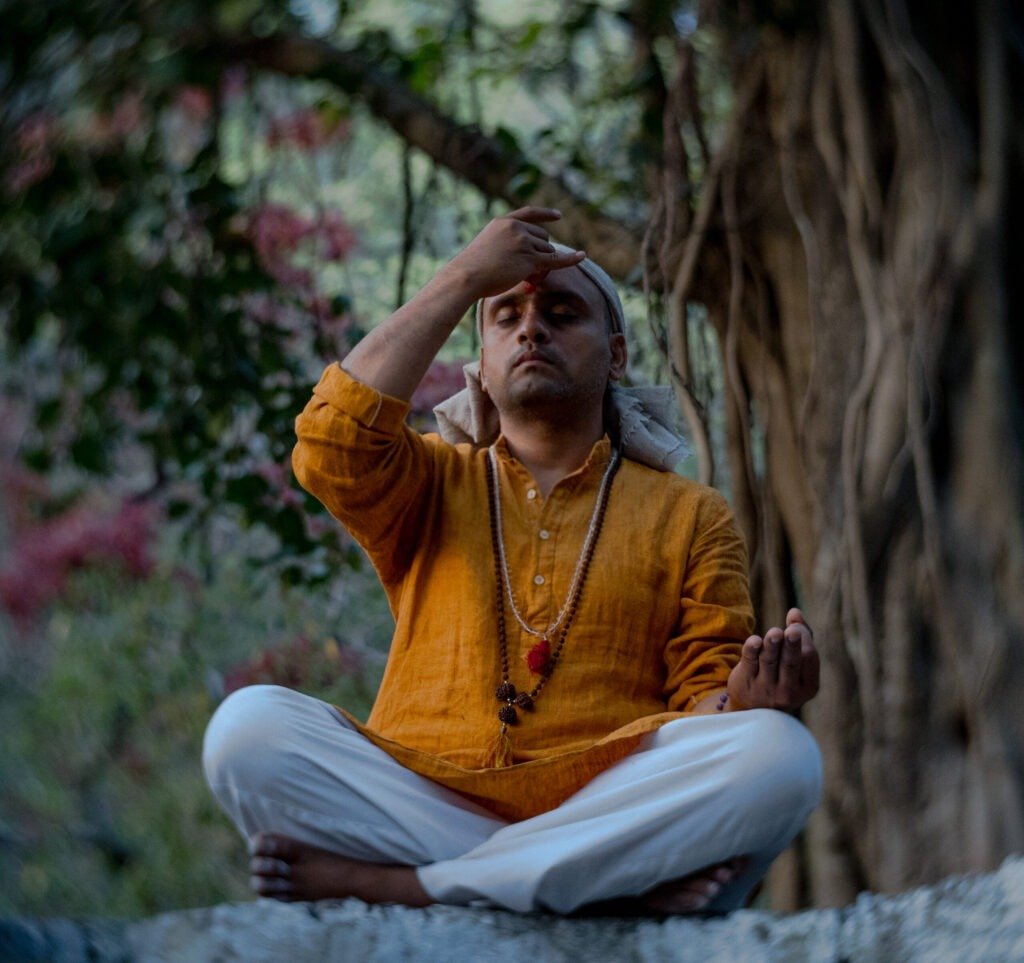
Traditional Kundalini practices may also incorporate bandhas and mudras.
Bandhas are specific yogic locks that integrate the breath, certain muscles and concentration in three places throughout the body: the throat, navel and root chakras. Mudras are physical or subtle yogic gestures used to support the direction of awareness and prana.
These practices are not simply mechanical techniques you perform without understanding. Their value comes from the relationship between physical action, energetic intention and conscious observation.
For this reason, advanced practices should be introduced progressively under qualified guidance.
From movement to inner stillness
One of the most important aspects of Kundalini kriya is its relationship with meditation.
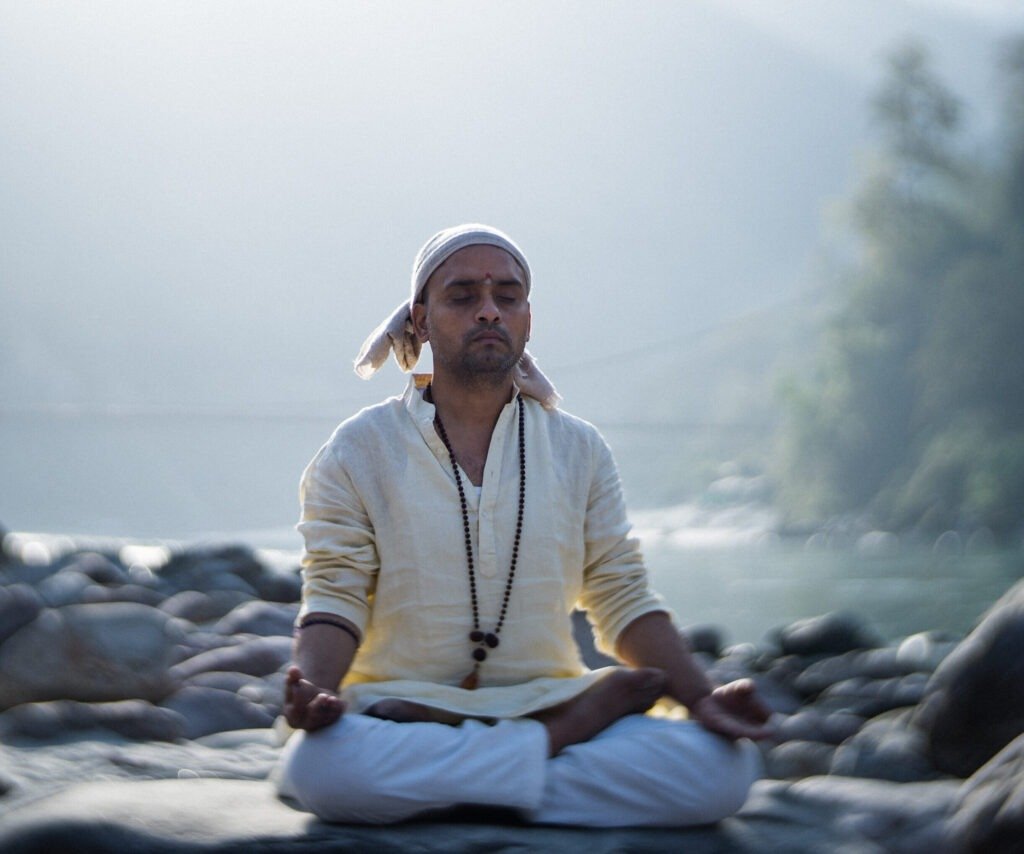
At first, the practitioner may experience the practice primarily through movement, breathing and concentration. However, as the practice matures, unnecessary effort gradually diminishes. The body becomes steadier, breathing settles, and mental activity becomes less dominant.
This creates favourable conditions for deeper meditation. Thus, Kundalini kriya is not simply a method of increasing energy. It is a process through which energy is progressively brought into harmony with awareness.
The ultimate purpose is not stimulation, but inner stability, clarity and the expansion of consciousness.
Shakti as part of every program at Vedic Yoga Centre, Rishikesh
Kundalini kriya provides a particularly direct approach to experiencing prana shakti through movement, breath, holding of breath, focusing on different parts of the body and focusing on the different energy centres. Its main aim is to bring the practitioner’s awareness into the present moment through specific observation of shakti.
However, every component of traditional yoga leads towards the same process. In mantra, we experience shakti through the vibrations created by sound. In asana practice, we direct awareness to the different parts of the body used during the practice, after which the student experiences the movement of shakti.
In essence, the practice of prana dharana – concentration on the movement of energy within – is a thread that passes through every practice shared with the student.
At Vedic Yoga Centre, our practices are not activities that are separate from life. They form an integrated system through which the practitioner learns to recognise and harmonise one’s life energy, a faculty that can be taken into everyday life.
Hatha Yoga – preparing the physical foundation
The physical body is the instrument through which we experience and express life.
Traditional Hatha Yoga develops steadiness, flexibility, strength and coordination. However, its deeper purpose extends beyond physical well-being. Through asana, the practitioner learns to observe the relationship between movement, breath and awareness. When the body is restless or uncomfortable, sustained concentration becomes difficult. Therefore, physical practice prepares the conditions for deeper inner work.
In this way, Hatha Yoga provides a foundation for the conscious expression of shakti.
Pranayama – regulating the life energy
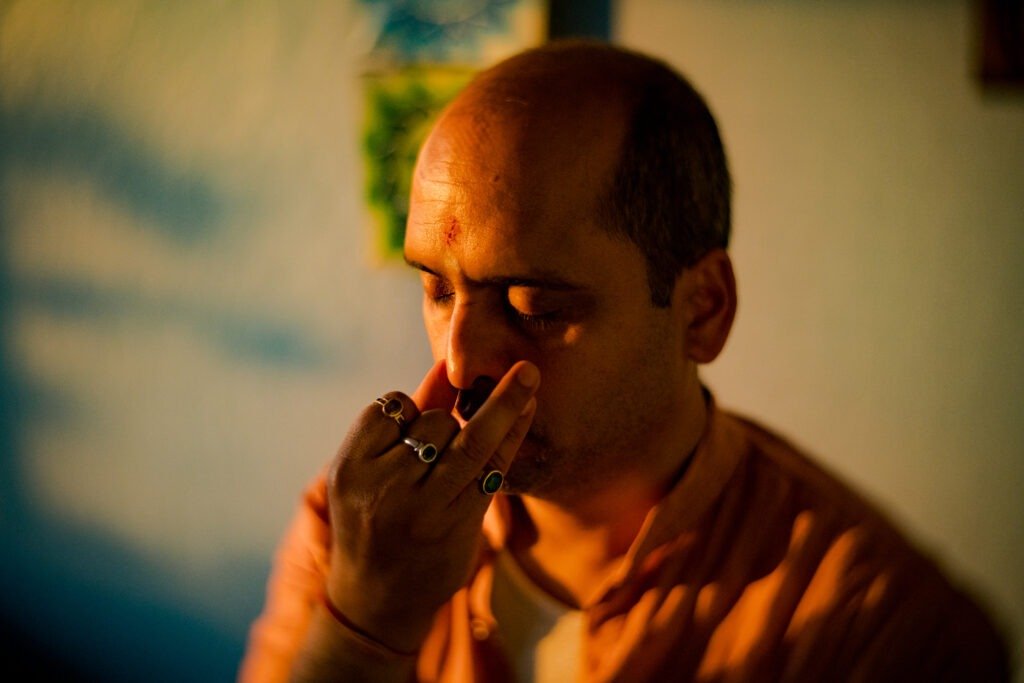
The practice of pranayama is essential in the yogic journey because it works directly with the relationship between breath, prana and the mind.
Rather than simply taking more air into the lungs, traditional pranayama teaches conscious regulation of breathing. As the practitioner develops sensitivity, the breath becomes steadier, and the mind less reactive.
The aim is not to accumulate unlimited energy, but to cultivate balance and the ability to direct attention consciously.
Meditation – recognising the Source beyond movement
Shakti is the power of movement and manifestation. Yet the spiritual journey also requires an understanding of the stillness from which movement arises.
Meditation allows the practitioner to observe thoughts, emotions and sensations without becoming completely hooked into them. Gradually, we begin to recognise the difference between awareness itself and the activities appearing within awareness.
This understanding is fundamental to the relationship between Shiva and Shakti – energy continues to move, but consciousness is no longer entirely carried away by that movement.
Mantra, kirtan and the power of sound
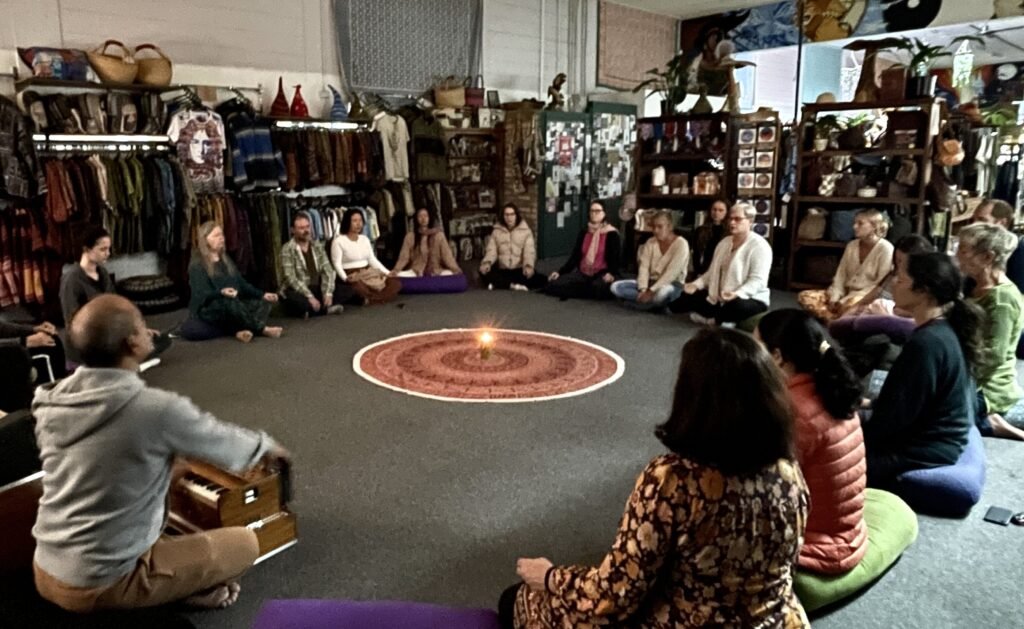
Sound is another important expression of Shakti. The yogic tradition understands mantra as a way to focus and redirect the mind through sacred sound.
At Vedic Yoga Centre, mantra chanting, kirtan and satsang form part of our daily spiritual environment. Repeating mantra gives the restless mind a point of concentration, while collective chanting encourages participation, devotion, and a sense of connection.
Through sound, rhythm, breath, and awareness, the practitioner experiences another dimension of life’s creative power.
Ayurveda – supporting the conditions for balance
As sister sciences, Ayurveda and yoga both maintain that human life is interconnected with the rhythms and qualities of nature.
Ayurveda approaches well-being through appropriate food, daily routines, rest, lifestyle and individual constitution. On our Vedic Yoga Centre Rishikesh website, Ayurvedic treatments and Panchakarma programs complement yogic practice by supporting the body and encouraging a more balanced daily life.
With proper guidance, Ayurveda provides a supportive foundation for the discipline of yoga.
Shakti as the power of manifestation in daily life
The power of shakti is not confined to the yoga hall.
Every intention that you turn into an action, every negative habit you overcome, and every moment of conscious understanding reflects the movement from potential towards manifestation.
Consider the difference between knowing that patience is valuable and actually remaining patient during a difficult situation. Intellectual understanding alone will not be sufficient. Transformation requires awareness, energy, discipline and repeated practice.
Similarly, a person may understand the importance of compassion yet continue to react harshly through established habits. Spiritual practice helps bring our understanding into expression. This is the practical meaning of manifestation in yoga – it is not the popular notion that merely thinking about something will cause the universe to deliver it, nor is it the pursuit of extraordinary personal powers.
True manifestation is the process through which inner awareness becomes conscious action and spiritual understanding becomes a lived reality.
As this relationship develops, the practitioner will be less governed by automatic reactions and better able to respond to life with clarity. The energy that once supported restlessness can be directed towards steadiness. The energy of emotional reaction can become an opportunity for self-understanding.
Shakti has not necessarily changed. Rather, our relationship with that energy has become more conscious.
The power of shakti in the Himalayan Yoga tradition
The Himalayan yogic tradition recognises that spiritual development requires more than learning techniques. It requires a sincere commitment to sadhana, or regular spiritual practice.
Knowledge provides direction, but experience develops through consistent application. At Vedic Yoga Centre in Rishikesh, senior teacher and founder Shailendra Singh Negi shares these teachings through the traditional relationship between teacher, student and practice.
He encourages students to understand the purpose of each technique rather than simply do as he instructs them. Our teacher training programs, yoga retreats, beginner courses and others, integrate Hatha Yoga, pranayama, Kundalini kriya, meditation, yogic philosophy, mantra and traditional lifestyle disciplines.
In our residential environment, daily practice continues beyond formal classes. Shared meals, periods of quiet reflection, kirtan, satsang and ordinary daily activities all become opportunities to observe the movement of energy and awareness.
Whether students join a Yoga Teacher Training Course, a Yoga and Meditation Retreat, or a longer period of personal study, the underlying principle remains the same.
We are not offering to manufacture spiritual experiences. We are learning to recognise the living power already present and to bring its expression into greater harmony with consciousness.
Awakening shakti through awareness
Many people misunderstand Kundalini and shakti, thinking that spiritual growth depends on generating increasingly intense energetic experiences.
However, intensity does not necessarily indicate understanding. While you might find a strong sensation during meditation, a spontaneous movement or an emotional release to be meaningful, you should not automatically interpret it as evidence of Kundalini awakening.
The traditional path emphasises preparation, discrimination, patience, and balance. Yama and niyama, the ten disciplines described in Patanjali’s Yoga Sutras, help establish the ethical and personal conditions for spiritual practice.
Truthfulness, non-harming, moderation, contentment, self-study and disciplined living are not separate from the awakening of shakti. They influence how we express our energy in everyday life. Without these foundations, even powerful practices may strengthen existing patterns of attachment or self-importance.
Therefore, at Vedic Yoga Centre, developing awareness remains central to the practice. The question is not simply how much energy we can experience, but how consciously we live as a result.
From individual energy to universal consciousness
The deeper purpose of working with prana shakti is to move beyond the limited identification with the individual personality.
At the beginning of the spiritual journey, we experience ourselves primarily through the body, thoughts, emotions and personal history. However, through sustained sadhana, we begin to observe that all these experiences are continually changing.
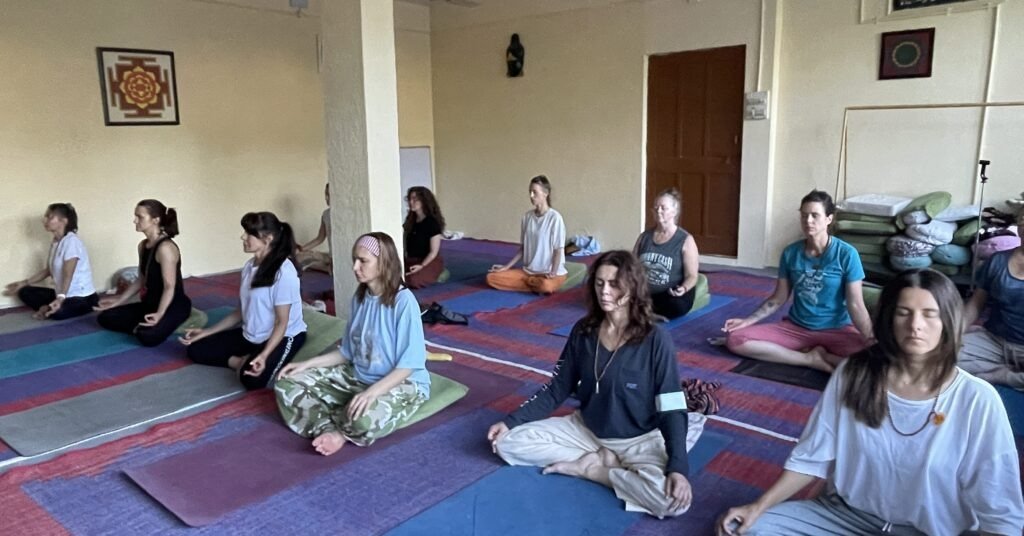
The breath, thoughts, and emotions change – even the physical body changes throughout life. Yet awareness allows us to witness these movements.
In the traditional yogic understanding of non-duality, the journey ultimately points towards recognising that individual existence is not separate from the greater reality of life. Prana shakti is therefore not something limited to our personal selves. It is an expression of the universal power through which all existence manifests.
As this understanding matures, the practitioner develops a deeper sense of connection with other living beings and with nature itself. Spiritual practice then becomes less about personal achievement and more concerned with living consciously.
Conclusion – shakti is already within us
The power of shakti is not something distant that we have to bring into our lives from outside. It is present in every breath, movement, expression of nature and every possibility for transformation.
Through Kundalini kriya, we learn to work more consciously with this power. Through Hatha Yoga and pranayama, we prepare and harmonise the body and breath. Through meditation, we develop awareness. Through mantra, Ayurveda and disciplined living, we create conditions that support the spiritual journey.
Ultimately, all these practices lead towards the same understanding: the Source of life is not separate from the life we are living.
At Vedic Yoga Centre, our purpose is to guide students towards this recognition through sincere practice, traditional Himalayan wisdom and direct personal experience.
Shakti is the power of manifestation. Consciousness provides the awareness through which we can understand that power. When the two are brought into harmony, yoga moves beyond something we practise and becomes the way we live.