Understanding the power of inner silence in yoga
At Vedic Yoga Retreat Centre in Rishikesh, we include the power of silence in yoga as an essential part of the practice – but it is not outer silence we seek, it is the inner silence of the mind.
True silence begins only when the mind stops running behind every thought, memory, desire and fear. This inner silence is one of the most important aspects of yoga, because without it, practice remains only physical movement, breathing techniques or outer discipline. When we allow silence to enter the mind, yoga becomes a path of self-observation, self-purification and inner awakening.
Modern life is full of noise: traffic, work, phones, social media and constant information. Yet most of the noise is not outside; it is within the mind. Even in a quiet room, the mind continues to think, judge, compare, plan and remember. This inner noise limits our capacity to connect with our true Selves.
Yoga teaches that peace is not created from outside. Peace is already within us, but it is covered by the noise of the mind. The practice of silence helps remove this covering. It gives us space to see ourselves clearly and move towards a state of meditation.
Silence is not emptiness
People often misunderstand silence as emptiness, loneliness or suppression. However, the power of silence in yoga is your awareness, which is a living presence. When a person enters silence sincerely, rather than becoming dull or passive, they become more awake. They begin to notice the breath, the condition of the body, the mind’s restlessness, and the deeper impressions that guide their behaviour.
Outer silence reduces distraction, but its deeper purpose is to lead us towards inner silence. If we stop speaking but continue arguing, judging or worrying within, silence has not yet entered the mind. Only when the mind has become silent enough to observe itself can practice move deeper.
Why inner stillness is essential in yoga
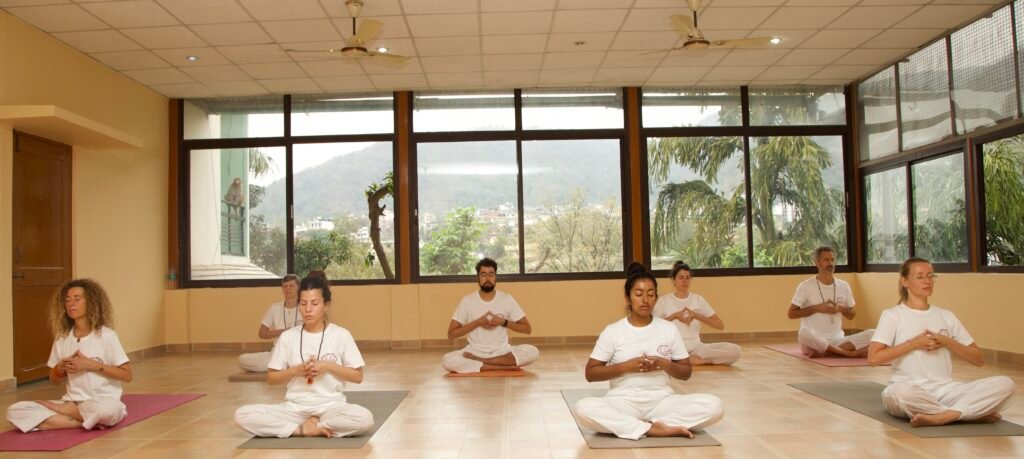
Yoga is not only the practice of asana. Asana prepares the body, pranayama refines breath and energy, and concentration focuses the mind within. Silence underpins all of these practices. Without silence, asana becomes exercise, pranayama becomes mechanical breathing, and meditation becomes simply sitting with closed eyes while the mind continues its old habits.
On the other hand, the power of silence in yoga is that it deepens our practice from within. It makes us more sensitive to the body, breath and mind. We begin to experience where tension is held, where the breath is disturbed and where the mind is resisting. This is where yoga becomes individual and genuine. A teacher can guide us, appropriate spiritual company can inspire us, and a Retreat Centre can provide the right environment, but each person must finally sit with their own mind.
Learning to calm the mind
Silencing the mind does not mean violently resisting thoughts. Force merely creates more tension. Only through awareness, discipline and understanding can we lead the mind towards silence. When we sit quietly, we may initially notice more thoughts than before. This does not mean practice is failing. It means we are finally seeing lies hidden in the subconscious and unconscious mind.
In silence, hidden memories and patterns become visible. We see how quickly the mind reacts, how often it moves into the past or future, and how strongly it holds likes and dislikes. This is not overthinking but self-analysis, as we are finally observing our inner world with greater clarity. Here we begin to understand the power of silence in yoga as a practical tool for self-study, not just as a peaceful feeling.
Through regular practice, the mind gradually becomes less scattered. The breath becomes more subtle and spontaneous, the body becomes steadier, and awareness becomes more refined. Then silence is no longer something we try to practise. It becomes a natural state that arises from within.
From awareness to meditation
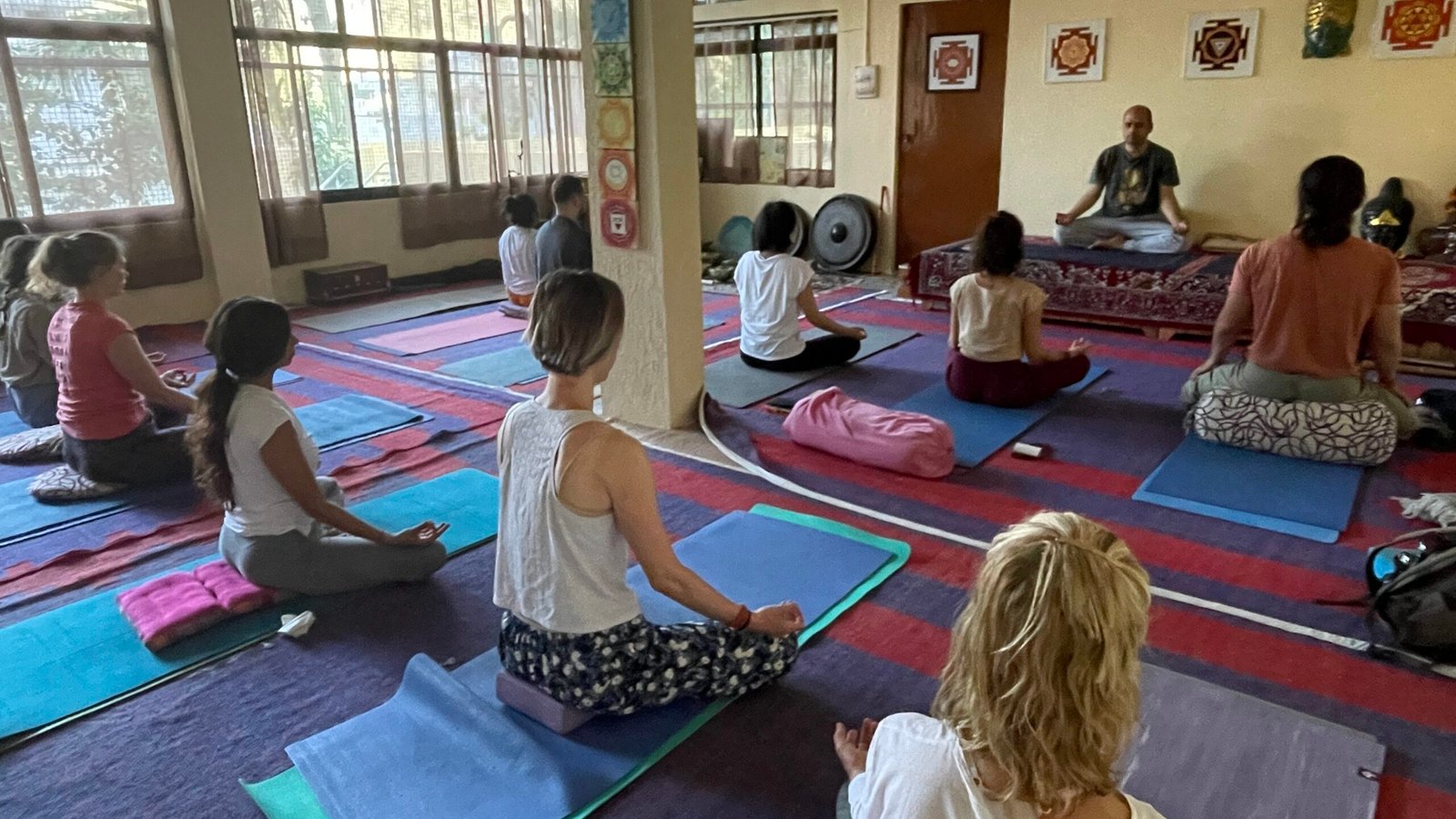
One of the first steps towards meditation is withdrawing the mind from external distractions (pratyahara). Silence helps the mind focus, or at least become aware when it has drifted away from the practice. When we stop feeding the mind with external stimuli, we are able to preserve energy, directed this back to a single point, such as the breath, a mantra, the heart centre, or the space between the eyebrows.
In the beginning, concentration (dharana) may last only a few moments. The mind wanders again and again, but each time we bring it back with patience, we are strengthening our focus. This is abhyasa – steady, consistent practice.
The environment for self-analysis
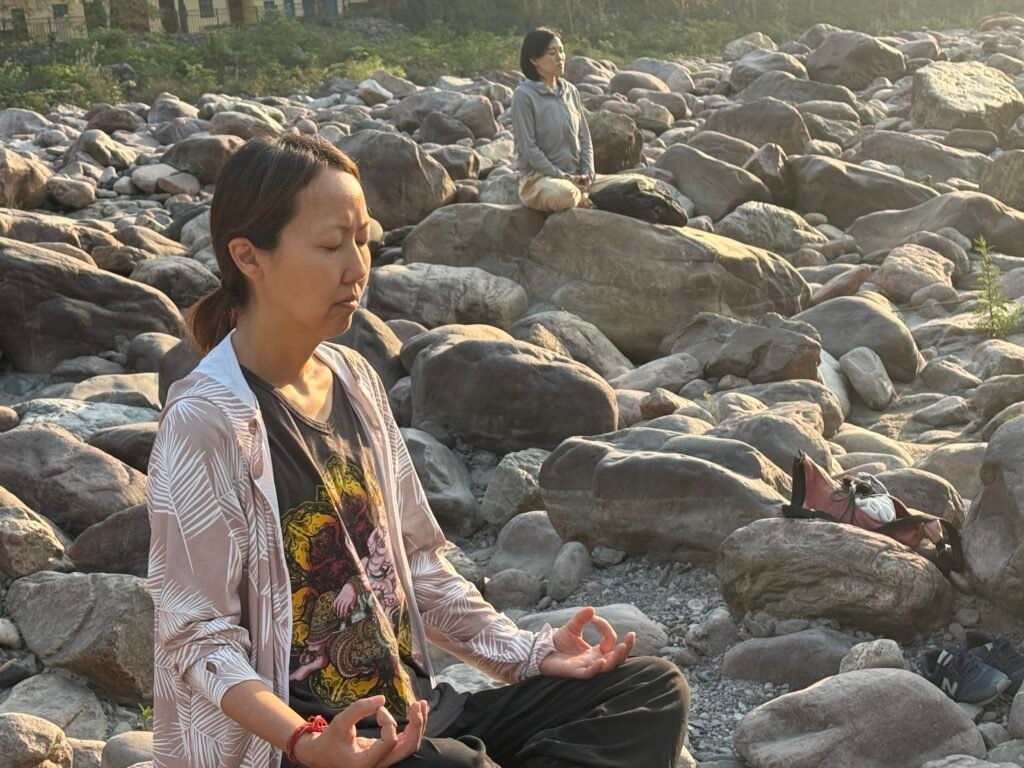
Silence also makes self-analysis possible. Constant speaking or distraction allows us to avoid looking within. However, it is natural that when the conscious mind becomes quiet, all the negative habits and impressions surface. We begin to see fear, attachment, anger, expectation and insecurity. This is when most people stop the practice, because it is uncomfortable.
In summary, pratyahara withdraws the senses from worldly distractions, allowing awareness to turn inward. Once the senses become quieter, the mind can compose itself – this is dharana, or concentration. Instead of moving from one thought to another, the mind begins to stay with one point. When concentration becomes continuous and effortless, it moves towards dhyan, or meditation.
Meditation cannot be forced, but you can prepare the mind for it.
Purification of the mind
Facing our negativities is a necessary part of purification. Every life experience leaves an impression that influences how we think, feel and respond to life’s challenges. When the mind is full of noise, these impressions operate unconsciously, and we react without understanding why. Silence allows these impressions to surface. Through observation, breath, mantra and meditation, they begin to lose their hold. You cannot rush this process – it requires patience. Remember that the mind has collected these impressions over many years. But each sincere attempt at silence weakens old habits and strengthens determination.
Self-analysis is not self-criticism – it is observing with clarity. When we can see a pattern clearly, we are no longer completely controlled by it. Awareness creates distance, and that distance gives us freedom to choose.
Mauna: The yogic discipline of silence
In the Himalayan tradition of yoga, silence is known as mauna. Mauna does not mean simply refusing to speak. It is a conscious discipline through which speech, thought and energy are gradually brought under control. Practised correctly, mauna helps conserve energy, reduce mental disturbance and increase awareness in the mind.
Many people speak without awareness, using words to react, defend, complain or fill empty space. Through mauna, we learn that not every thought needs to become speech and not every emotion needs immediate expression. This restraint is not suppression; it is the beginning of self-mastery.
The deeper purpose of mauna is inner silence, quietening the constant inner conversation. Disciplining your speech helps to discipline your mind, creating space for concentration, self-analysis and meditation.
Moving from silence to meditation
Meditation cannot be practised. We can prepare for it, but we cannot command it. Only when the body has become steady, the breath more subtle, and the mind completely quiet, can meditation be possible.
This is why the preparation is so important. Asana prepares the body, pranayama balances the breath and prana (life-force), pratyahara withdraws the senses, and dharana gathers the mind into concentration. Dhyan begins when concentration becomes continuous.
Silence underpins this whole movement. It is not separate from yoga; it is integrated into the path.
The disruption of modern life’s constant noise

In modern society, the majority of people have become increasingly dependent on external stimulation through social media, advertising and technology, largely because they cannot cope with their own silence. The moment there is silence, they reach for a phone, music, conversation or entertainment. Unfortunately, constant noise weakens one’s attention, increases restlessness and makes self-understanding difficult. A person may know many things about the world but still remain a stranger to their own mind.
Yoga asks us to reverse this habit. Instead of always moving outward, we learn to turn inward. Rather than expressing every thought we have, we learn to observe them in order to decide whether they need to be verbalised. Instead of filling every space with sound, we allow silence to teach us.
Bringing silence into daily life
Silence should not remain limited to a meditation cave or yoga hall. It must slowly become part of daily life. This does not mean not speaking at all. Speech is necessary, but it should become more conscious. Each time, ask yourself: are these words necessary … truthful … kind … useful?
When speech becomes disciplined, energy is saved, and the mind becomes clearer. A simple practice can begin with just a few minutes of silence each morning before checking the phone or joining a conversation. Sit quietly, observe the breath and watch the mind. Let the moments arise from awareness rather than stress.
Short periods of silence after asana or pranayama are also valuable. Instead of finishing practice and rushing away immediately, sit still and let the effects settle. Silence before sleep is also powerful. A few minutes of quiet sitting, mantra, or breath awareness can help the mind let go of the day’s experiences.
The strength of restraint in speech
The speech of a person who values silence becomes more meaningful. When the mind is noisy, we speak to defend, impress, complain or control. But when the mind has experienced silence, speech carries more weight because the words come from a place of greater awareness. Silence during meal times is a perfect opportunity for the practise of silence.

Silence can also be an indication of strength. It takes strength not to react immediately, to observe anger without becoming angry, and to sit with discomfort without running away. This strength arises from inner discipline. Silence gives us space to respond rather than react.
Connecting with the inner Self
Silence not only creates a space where relaxation is possible, but also helps us move towards the true Self. While the human experience does involve the restless mind, changing emotions, the body, one’s name, role, or personality, these are not the fundamental truths of who we are.
When the mind is constantly moving, we identify with every thought and feeling, but in silence, we begin to see that anger, fear, restlessness and other unhelpful emotions are just passing states. There is something deeper that observes them. The more silent the mind becomes, the more clearly this “seer” awareness is experienced.
The traditional value of silence
In the Himalayan tradition, many sages and spiritual seekers entered forests, mountains, caves and ashrams, not because they were escaping from life, but because they understood the importance of a quiet environment for spiritual practice. It expresses the power of silence in yoga by creating an environment where the senses naturally become quieter and the mind can turn inward.
A cave has special meaning in this tradition. It is simple, contained, and free from unnecessary stimulation, offering the mind a better environment in which to begin facing itself. Silence in such a place is not ordinary silence. It carries discipline, respect and sacredness. One does not go there to talk, perform or impress others. One goes there to become simple.
Devi Gufa: A space for inner silence at Vedic Yoga Centre, Rishikesh
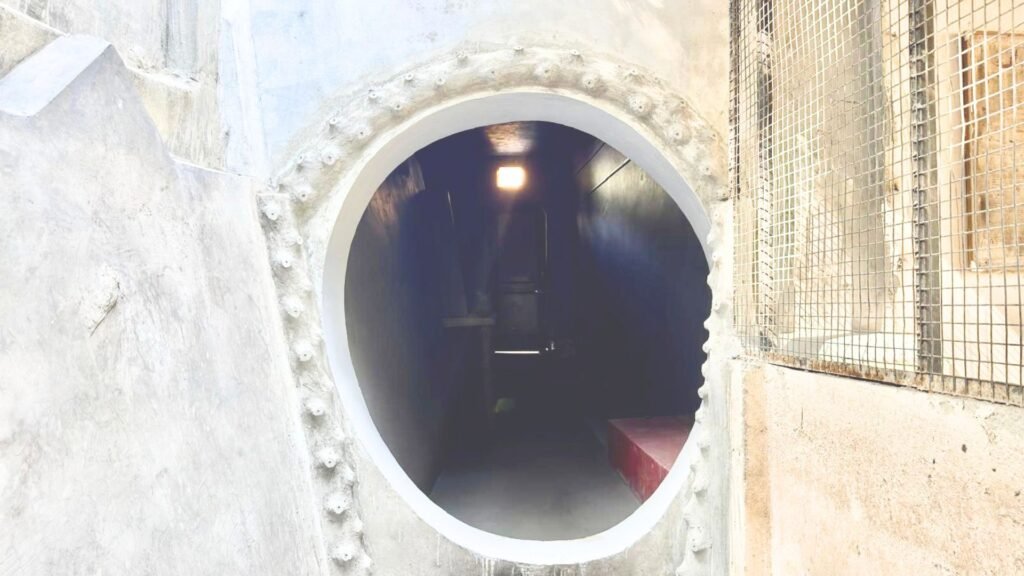
Step into the newly-constructed tunnel of silence known as the Devi Gufa at the Vedic Yoga Centre in Rishikesh. It is a meditation “cave” dedicated to silence, individual concentration and self-analysis. No speaking or unnecessary noise is allowed. The space is not for discussion, teaching or social gathering. It is purely for individual practice.
When a person enters Devi Gufa, they choose to leave outer noise behind and turn towards the quiet work of self-observation. The small nature of the space helps the practitioner feel steady, contained and inwardly focused. In such an atmosphere, the senses naturally begin to withdraw, and the mind is encouraged to settle.
Devi Gufa is a place where the conditions for meditation are safeguarded. The outer silence inspires inner silence, which leads to concentration, and if the mind has become steady enough, meditation may arise naturally.
The role of Devi Gufa in a yoga retreat at Vedic Yoga Centre, Rishikesh

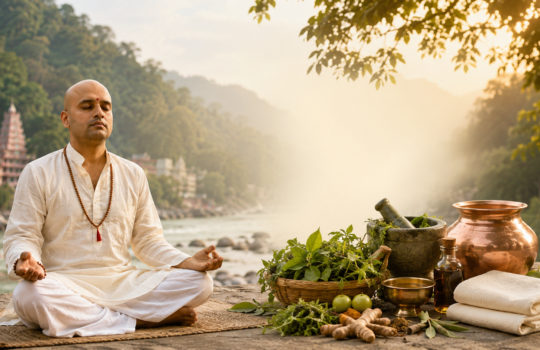
For guests and students at the centre, Devi Gufa provides a valuable space where your practice can be deepened. After yoga, pranayama, satsang, Ayurveda treatments – or at any time of the day when you are free – the cave can become a place to sit quietly and allow the inner process to continue without disruption.
It is especially useful for those who feel overwhelmed by mental activity. Rather than trying to solve everything through thinking, they can sit in silence and observe. Many answers become clearer when the mind stops chasing them. At first, you should sit only for a short time. If your silence is sincere, then even a brief period can be powerful. Come and join us for a yoga retreat where you can experience the power of silence in yoga through the Devi Gufa.
Entering the Devi Gufa with respect
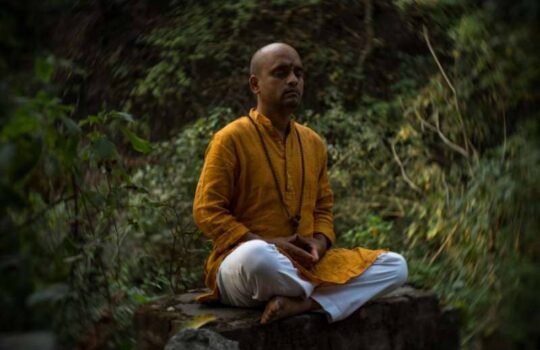
A meditation space, such as the Devi Gufa, should be entered with respect. You don’t need to invite anyone to join you. Move slowly. Sit with a straight but relaxed spine. Let the breath become natural. Do not fight thoughts, and especially do not follow them. Simply watch them as they come and go.
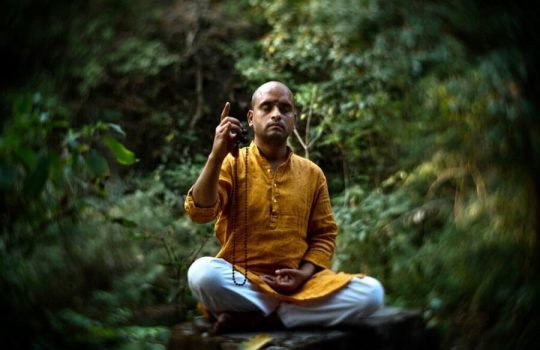
When concentration is difficult, gently bring awareness to the breath or mentally repeat a mantra. If emotions arise, observe them without suppression. If restlessness comes, remain patient. The practice is not to create a special experience. The practice is to remain aware.
Continually returning to silence
Sometimes the deepest teaching comes through silence. Silence shows us our impatience, attachments and dependence on outer activity. It also shows us our inner strength, clarity and capacity for peace.
Yoga does not ask us to reject the noise of the world, or our duties, conversations and challenges. It teaches us how to live with a quieter mind. The real test of silence is not only whether we can sit quietly in a cave, but whether that silence can guide our actions, speech and relationships in everyday life.
Devi Gufa reminds us that to value silence is to value the inner journey. Silence practised moves us closer to meditation, peace and the true Self. All of our courses, classes and therapies encourage silence as a fundamental part of the respective programs:
- Yoga teacher training (where you learn about the power of silence in yoga for your personal practice, and how to inspire others with this knowledge
- Ayurveda treatments (including our Panchakarma Detox and Stress Management programs)
- Pilgrimage to the Himalayas (see details of our pilgrimage to Gangotri and Badrinath)
Come and stay with us at the Vedic Yoga & Ayurveda Retreat Centre in Rishikesh to experience the power of silence in yoga.
In the end, yoga teaches us not only how to move the body or control the breath. It teaches us how to become silent enough to connect with who we really are.