(Vedic Yoga Retreat Centre’s perspective on the combined study & practise of these traditional sciences)
“The combined sciences of Yoga and Ayurveda are a gift to humanity,
and a time-tested wisdom that uplifts your total well-being.”
(Shailendra Singh Negi)
Yoga and Ayurveda in modern life is the answer to many of modern life’s current challenges: excess comfort, speed and greater access to information. At the same time, it has disturbed many of the natural rhythms that support physical health, mental stability and inner awareness. People often eat without hunger, sleep at irregular times, remain seated for long periods and consume more information than the mind can properly digest. Yoga and Ayurveda in modern life offer a traditional answer to these conditions.
The combined sciences of yoga and Ayurveda do not treat the human being as a collection of unrelated parts. Both sciences recognise that the body, breath, senses, mind, behaviour, environment and consciousness affect one another.
Yoga and Ayurveda in modern life
This subject matters because in modern life, yoga teachers are increasingly reducing yoga to physical exercise, while often minimising Ayurveda to massage, herbal products or short detox programmes. These limited presentations do not represent the full purpose of either tradition.
Within the Himalayan tradition, yoga and Ayurveda are complementary disciplines. Ayurveda helps establish the physical and mental conditions required for practice. Yoga guides the practitioner past physical management towards steadiness, self-awareness and direct knowledge of consciousness.
Beyond physical exercise
Yoga is commonly presented as a system for stretching, strengthening and relaxation. These functions have value, but they are not the final purpose of yoga.
Traditional yoga is a disciplined process of regulating the body, breath, senses and mind. Its practices include ethical principles, daily discipline, asana, pranayama, mudra, bandha, kriya, mantra, concentration and meditation.

Each practice has a particular function. However, all genuine yogic methods share the same direction: they gradually redirect attention and energy from external distraction towards your centre of awareness.
Modern research suggests that appropriately taught yoga supports stress management, improved sleep, life balance, general wellbeing and many aspects of pain management. From the traditional perspective, students identify the benefits of yoga by the regularity of their practice. Occasional practice may give temporary relief, but sadhana (daily practice) needs consistent effort. The mind becomes stable only when practice is repeated with patience, correct understanding and acceptance of your personal capacity.
Ayurveda as the science of daily living
Ayurveda is often described as the science of life. It is a traditional Indian system concerned with establishing balance and understanding why disorders are happening.
Its methods may include daily routine, seasonal adjustments, food, digestion, sleep, exercise, therapeutic procedures, massage and plant-based preparations. Ayurveda does not prescribe the same routine or diet for everyone. It considers constitution, present imbalance, digestive strength, age, climate, season, occupation and stage of life.

This approach on an individual basis is particularly relevant today. While general health advice is widely available, Inappropriately qualified therapists often apply it without considering whether it suits the person. A food, exercise programme or spiritual practice that helps one individual may disturb another.
Ayurveda asks practical, direct questions:
- Are you eating only when genuinely hungry?
- Are you digesting the food you eat?
- Are you eliminating properly?
- Are you sleeping at an appropriate time?
- Is your daily routine leading to stability or creating disturbance?
- Are your senses receiving more stimulation than your mind can process?
- Does your activity match your strength and stage of life?
These questions may appear simple. However, many long-term imbalances begin when individuals repeatedly ignore basic bodily intelligence.
Why yoga & Ayurveda in modern life belong together
Yoga and Ayurveda were developed within the same broad Vedic civilisation. Although their methods and areas of emphasis differ, they share important principles.
Both recognise that the human being is influenced by nature, valuing discipline, moderation, purification and self-observation. Both understand that physical habits affect the mind and that a person’s mental patterns affect the body.
Ayurveda supports the preparation and maintenance of the bodily instrument. Yoga trains the practitioner to use that instrument consciously.

For example, practitioners find it difficult to meditate when their digestion is disturbed, their sleep is poor, or their nervous system is overstimulated. Likewise, a well-managed diet alone cannot resolve attachment, fear, doubt or uncontrolled mental activity. Ayurveda can reduce avoidable physical obstacles, while yoga addresses the habits of attention and identification that produce inner disturbance.
The combined sciences offer a complete sequence:
- Establish a suitable daily rhythm.
- Assist digestion, sleep and elimination.
- Reduce unnecessary sensory stimulation.
- Prepare the body through appropriate movement and purification.
- Regulate the breath and vital energy.
- Train attention through concentration.
- Allow meditation to deepen through regular practice.
- Carry awareness into ordinary actions and relationships.
This sequence is practical. It does not depend on belief, fashionable language or dramatic experiences.
The modern problem of overstimulation
Modern life now buys and sells human attention. Phones, social media, advertising, streaming services and constant notifications compete for the mind throughout the day.
The problem is not technology itself, but its uncontrolled use.
When the senses remain continuously engaged, the mind has little opportunity to settle. Even during rest, many people continue to consume information. As a result, the body may be inactive while the nervous system and mind remain busy.
Yoga responds to this through pratyahara, the conscious regulation and withdrawal of the senses. Pratyahara does not require rejecting the world. It means becoming capable of deciding where to direct your attention.
Ayurveda supports the same process by examining the quality, quantity and timing of sensory input. Just as unsuitable food can disturb digestion, the problems of excessive sound, overly graphic imagery, unnecessary conversation, as well as ever-present digital intrusion into life, can burden the mind.
Therefore, yoga and Ayurveda in modern life require more than attending a class or receiving a treatment. They require a practitioner to seriously examine what enters his or her body and mind each day.
Restoring a stable daily rhythm
Traditional systems place great importance on routine because the body functions rhythmically. Hunger, sleep, hormonal activity, digestion and mental alertness follow daily patterns.
Modern timetables often override these patterns. People may stay awake late, eat at inconsistent times, work across several time zones or remain exposed to artificial light long after sunset.
Ayurveda recommends establishing regularity wherever possible. This may include:
- waking and sleeping at consistent times;
- allowing time for natural elimination;
- eating the main meal when digestive capacity is stronger;
- avoiding continuous snacking;
- adapting food and activity to climate and season;
- leaving space between work, meals and sleep;
- practising yoga at a regular time.
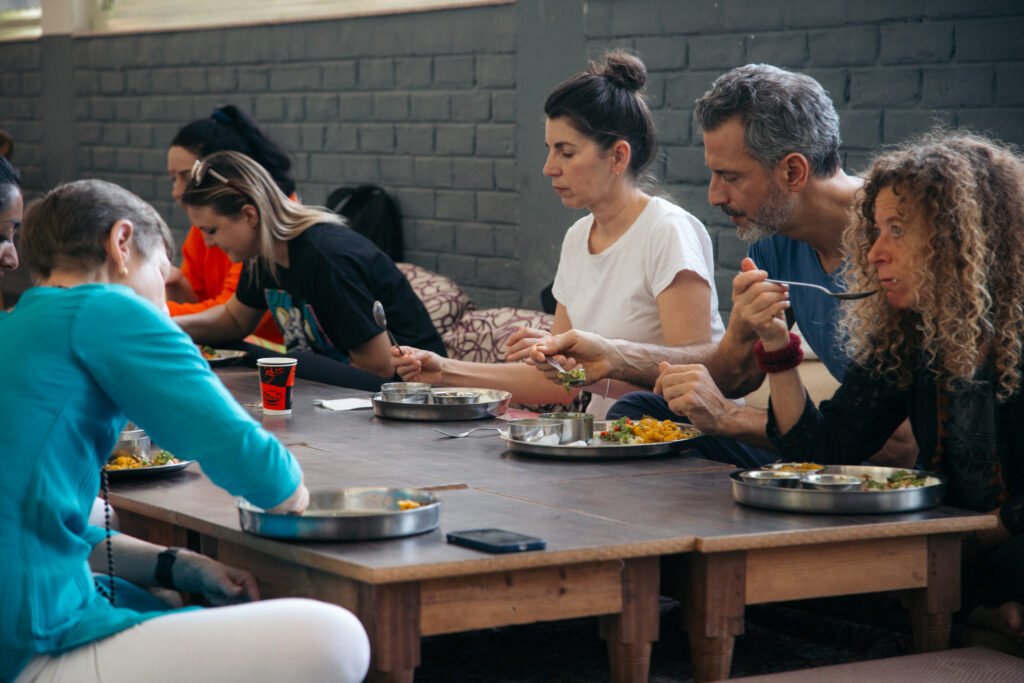
A traditional routine should not become rigid or obsessive. Its purpose is to reduce unnecessary disorder so that energy is available for meaningful work, relationships and spiritual practice.
Yoga then uses that stability. When practice occurs at the same time and in the same place, the body and mind begin to recognise the discipline. Resistance gradually decreases, and consistency becomes easier.
Digestion is not only about food
Ayurveda gives central importance to digestion. This includes the digestion of food, but it also includes the capacity to process experiences.
People can consume more food than they can digest. They can also consume more information, emotion and activity than the mind can integrate.
Poor digestion may show itself as heaviness, discomfort, irregular appetite or disturbed elimination. Poor mental digestion may appear as agitation, repetitive thinking, emotional congestion or an inability to remain still.
Yoga supports physical and mental digestion through appropriate asana, breathing practices, kriya and meditation. However, practices must suit the individual. Strong cleansing methods or pranayama that is forced can aggravate an already depleted or overstimulated person.
For this reason, traditional teaching does not separate technique from observation. Appropriately qualified teachers always assess a practice by its effects. Does it produce steadiness, clarity and balanced energy? Or does it create exhaustion, agitation, dependency or excessive excitement?
More technique is not always better. Practice with awareness is more important than quantity.
How discipline supports the nervous system
The language of nervous-system regulation is now common in wellness culture. It can be useful, but it should not become an excuse to avoid necessary discipline.
Yoga teaches relaxation, but it also teaches steadiness. Practitioners develop the capacity to remain present when their bodies are uncomfortable, their minds are restless or they cannot immediately satisfy their habitual desires.
Ayurveda applies the same balanced method. Rest is necessary when strength is low. However, excessive sleep, inactivity or indulgence can also increase dullness.
The aim is not constant comfort. The aim is appropriate regulation.
A balanced programme may include:
- sufficient sleep without oversleeping;
- nourishing food without overeating;
- movement without exhaustion;
- breathing practices without strain;
- meditation without forcing the mind;
- discipline without harshness;
- rest without laziness.

This middle path is especially important in modern times, when people tend to move between overwork and collapse rather than keeping steady effort.
Individual, not standardised practice
Many modern yoga classes apply one sequence to everyone. This is convenient, but it does not always reflect traditional understanding.
A younger person with strong digestion and good physical capacity may benefit from a more active practice. An older practitioner, a person recovering from illness or someone experiencing exhaustion may require slower movement, restorative postures, gentle breathing and shorter meditation periods.
Ayurvedic observation helps the teacher consider constitution, current condition and environmental influence. Yoga then provides the practical methods.
This does not mean every student requires a complicated diagnosis. It means the teacher should observe rather than mechanically impose a practice.
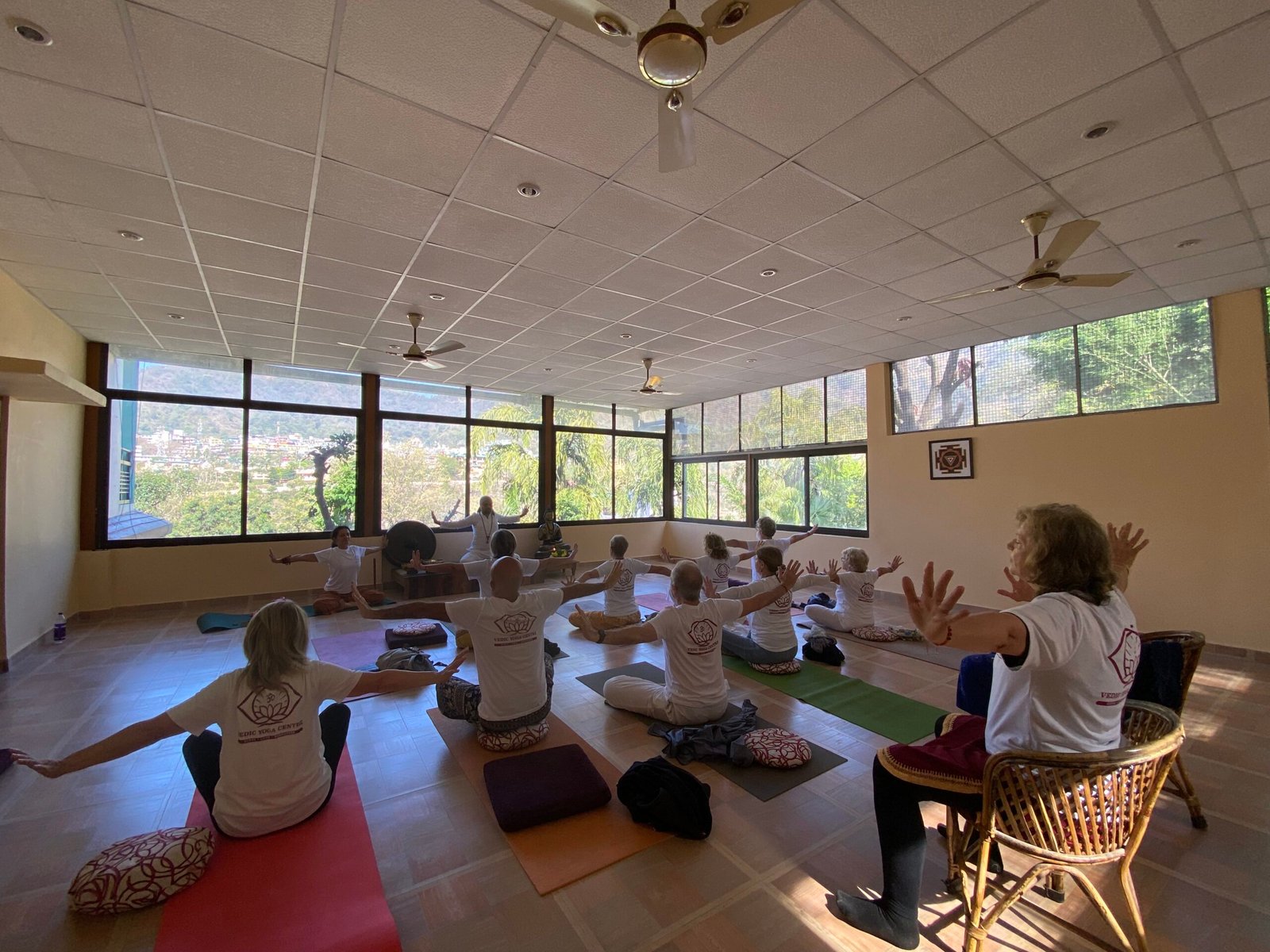
A sound programme should consider:
- physical capacity and mobility;
- breathing patterns;
- sleep and energy levels;
- digestion and elimination;
- emotional condition;
- experience with meditation;
- climate and season;
- work and family responsibilities;
- medical limitations.
Traditional personalisation protects the student from unnecessary strain and helps practice remain sustainable.
What is the role of purification?
Both yoga and Ayurveda in modern life include purification methods. Today, many organisations promote purification as rapid detoxification. Traditional practice is more careful. Purification should remove obstruction without weakening the individual. Its intensity must match strength, age, season and present condition.
In yoga, purification may include kriyas, regulated breathing, disciplined food intake, silence, mantra and the reduction of sensory excess. In Ayurveda, cleansing may range from simple dietary adjustment to supervised therapeutic procedures.
Intensive cleansing is not suitable for everyone. No one should attempt this merely because it appears spiritual or promises quick transformation.
The first purification may be very ordinary:
- stop eating when the previous meal remains undigested;
- reduce unnecessary stimulation;
- maintain personal cleanliness;
- establish regular sleep;
- speak less;
- stop constantly changing practices.
Such disciplines are less dramatic, but they are often more useful.
Yoga & Ayurveda require qualified guidance
Online information has made traditional teachings more accessible. It has also removed many practices from their proper context.
Serious practitioners should never learn deeper-level pranayama, bandha, mudra, kundalini techniques and intensive cleansing methods only through videos. These practices affect breathing, attention, energy and mental states. Incorrect use can produce strain or instability.
Likewise, Ayurvedic medicines and intensive treatments require proper assessment. Natural does not automatically mean safe. Ayurvedic products may interact with existing medicinal prescriptions or may be inappropriate during pregnancy, illness or other medical conditions.
A qualified teacher or practitioner should be willing to:
- ask about health history and present condition;
- modify practices;
- explain the purpose of a method;
- recognise when to seek medical referral;
- avoid exaggerated promises;
- encourage gradual progress;
- distinguish spiritual guidance from medical treatment.
Traditional masters have never relied on their appearance, vocabulary or popularity for the strength of their teachings. They have always expressed it through their direct knowledge, conduct, responsibility and the ability to guide students without creating dependency.
Himalayan tradition at the Vedic Yoga Centre
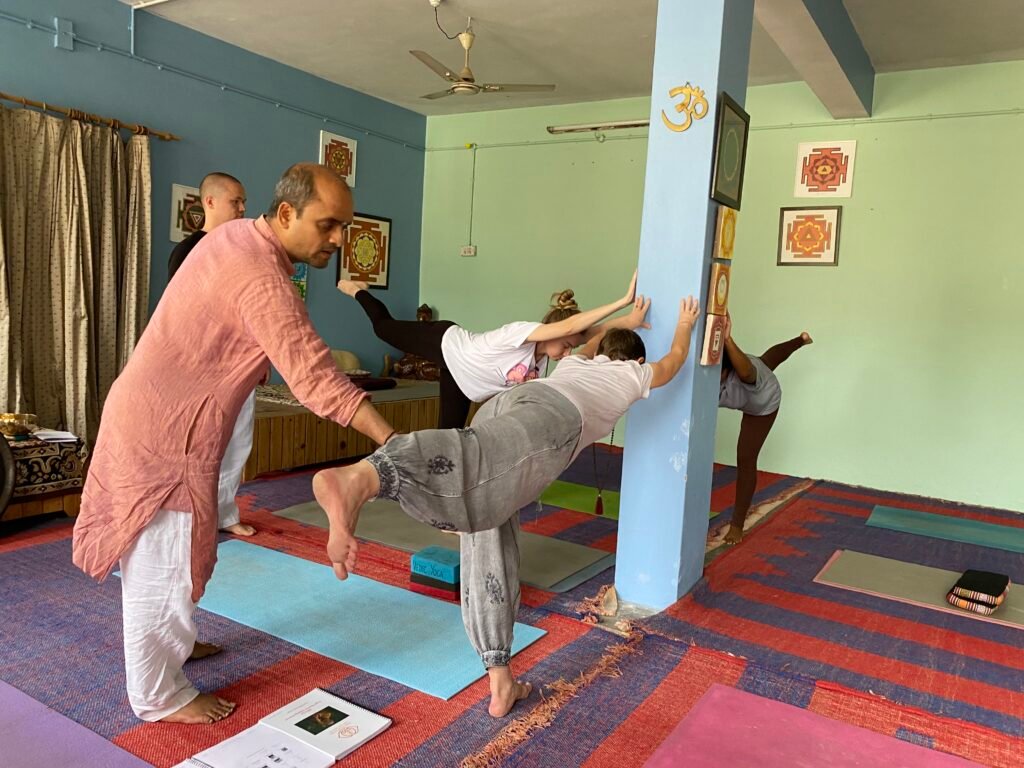
At the Vedic Yoga Centre in Rishikesh, the Himalayan tradition provides the basis for our teachings. It emphasises direct practice, inner observation, and continuity between teacher and student.
The ancient sages never intended to create a temporary spiritual mood. Rather, they trained practitioners to observe the movements of the body, breath, senses and mind without becoming controlled by them.
Ayurveda supports this work by helping the practitioner maintain the body and undertake a daily life suitable for sadhana. Yoga then uses that foundation to direct awareness towards its Source.
The two sciences therefore meet in practical self-knowledge: Ayurveda examines the conditions of your life; yoga examines the experiencer. Together, they provide a disciplined path from external order towards inner clarity.
Bringing the combined sciences into everyday life
A person does not need to abandon work or family responsibilities to begin.
Start with a few stable commitments:
- Wake and sleep at consistent times.
- Eat meals without screens or unnecessary distraction.
- Observe hunger before eating.
- Practise suitable movement and breathing daily.
- Sit quietly for a fixed period.
- Reduce digital stimulation before sleep.
- Study one authentic teaching rather than collecting many techniques.
- Review the effect of practice honestly.
- Request advice when a condition exceeds personal knowledge.
These actions are not spectacular. However, tradition has always valued consistency over speed.
The purpose of integrating yoga and Ayurveda is not to build a more complicated lifestyle. It is to remove the habits that keep the body disturbed and the mind scattered.
A necessary place for modern medicine
Yoga and Ayurveda should not be used to reject modern medicine.
Modern diagnostic methods, emergency care, surgery, infection control and pharmaceutical treatment have essential roles. Instead of seeing teating them with discrimination and competition, individuals should view the two systems as complementary.
The results of using yoga to support general wellbeing, help people manage stress, sleep disturbance or certain pain conditions, are not uniform. In addition, Ayurveda may offer useful approaches to routine, diet and lifestyle, but traditional treatments and therapies require the guidance of highly experienced practitioners.
Responsible integration means using each system within its appropriate field.
Conclusion
The importance of yoga and Ayurveda in modern life is found in their combined understanding of the whole person.
Ayurveda helps restore suitable conditions through food, routine, digestion, rest and attunement to nature. Yoga works through discipline, posture, breath, concentration and meditation. One supports balance in daily life; the other directs that balanced energy towards self-awareness.
Together, they address several modern problems: irregular living, overstimulation, poor attention, physical inactivity, excessive mental activity and disconnection from natural rhythms.
However, their value depends on correct application. Yoga should not be reduced to exercise, and Ayurveda should not be condensed into products or treatments. Both require observation, moderation, qualified guidance and consistent practice.
Yoga & Ayurveda at the Vedic Yoga Centre
At Vedic Yoga Retreat Centre, Rishikesh, these sciences are approached as related branches of Himalayan traditional wisdom. Their purpose is practical: to establish greater stability in the body, clarity in the mind and awareness in daily life.

Our Ayurveda programs—including the Panchakarma detox therapy, Stress Management program and Cooking Course—integrate daily yoga practices such as asana, pranayama, kriya, mantra, relaxation and meditation.
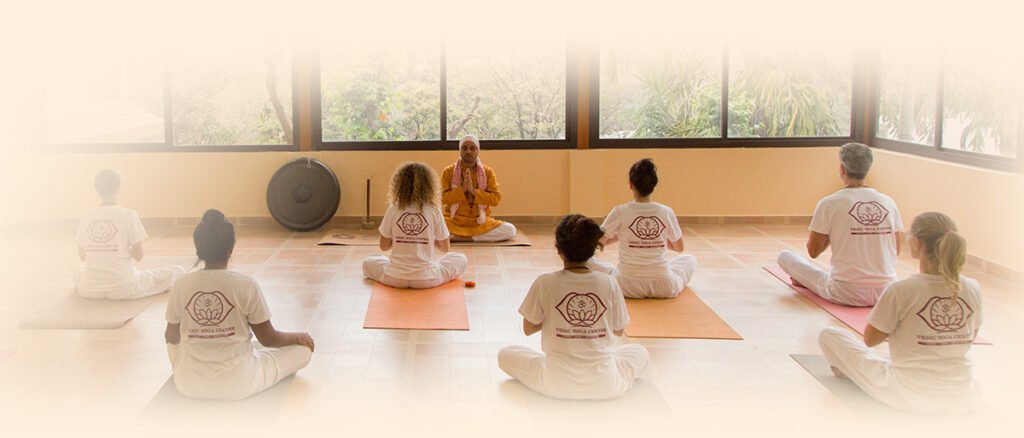
In the same way, our yoga programs, such as the Beginner Yoga Course, Yoga Retreat, Kundalini Kriya & Meditation Course, and Teacher Training programs, include one of Ayurveda’s most important foundations: healthy food. Three Ayurvedic vegetarian meals are served each day, allowing participants to experience how nourishing, wholesome food can support digestion, energy, clarity and overall wellbeing. When the body is properly nourished, it becomes easier to practise with greater clarity, awareness and creativity.
Join us in Rishikesh to experience the combined effects of Yoga and Ayurveda through each of our programs, all of which can be found on our website: www.vedicyogacentre.org