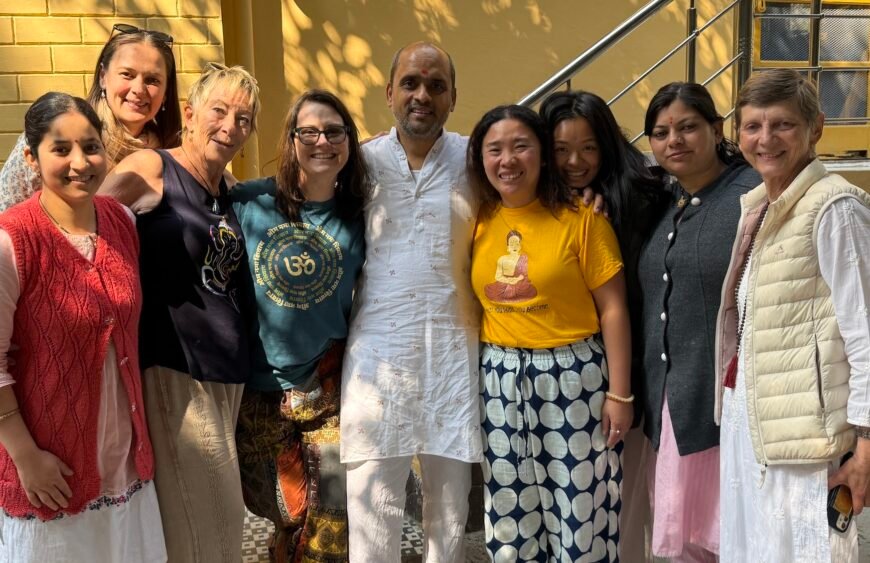
A 14-day spiritual yoga retreat at Vedic Yoga Centre is not an Indian holiday with yoga added on. It is a disciplined environment where you practise, reflect, and learn to turn your attention inward. When you give yourself two full weeks, the mind slows down. The body settles. The breath becomes deeper. And you begin to see what is actually going on inside you.

In the Himalayan tradition – that is an essential part of the Vedic Yoga Centre programs – all the practices and discussions are based on the ancient Vedic and Tantric teachings to maintain the authenticity of the yoga being offered. Furthermore, transformation comes through repetition, determination and correct guidance. Our retreats give you the routine to do the basics well: asana, pranayama, kriya, meditation, mantra, satsang, and rest. That is why fourteen days matters. It is long enough to break old habits, and steady enough to build new ones.
Why fourteen days?
A weekend can inspire you. A week can calm you. But two weeks gives you a chance to live the practice, not just sample it.
Over the first few days, you usually notice how busy the mind is. Old memories continually arise, and the emotions feel more sensitive as the nervous system begins to unwind. In the second week, you become capable of observing rather than reacting. You begin to become aware of your habits and learn not to fight them, but simply to see them as they are.
Fourteen days also underpin the traditional sequence of yoga: gradually prepare the body, deepen the breath, and observe the mind. This is a systematic process that, when respected, leads to growth.
The 14-day spiritual yoga retreat is not entertainment
Modern life trains the mind to chase objective experiences, while a spiritual retreat asks you to stay present with what you have. The outings, sacred sites, and festivals are not there to “fill time”. They are there to support your inner work.
When you visit a cave for meditation, watch the Ganga, attend aarti, or sit in all-night devotion at Shivratri, the question is not, “What did I see or do?” but rather, “What effect did it have on me, and how can I use this for my spiritual growth?”
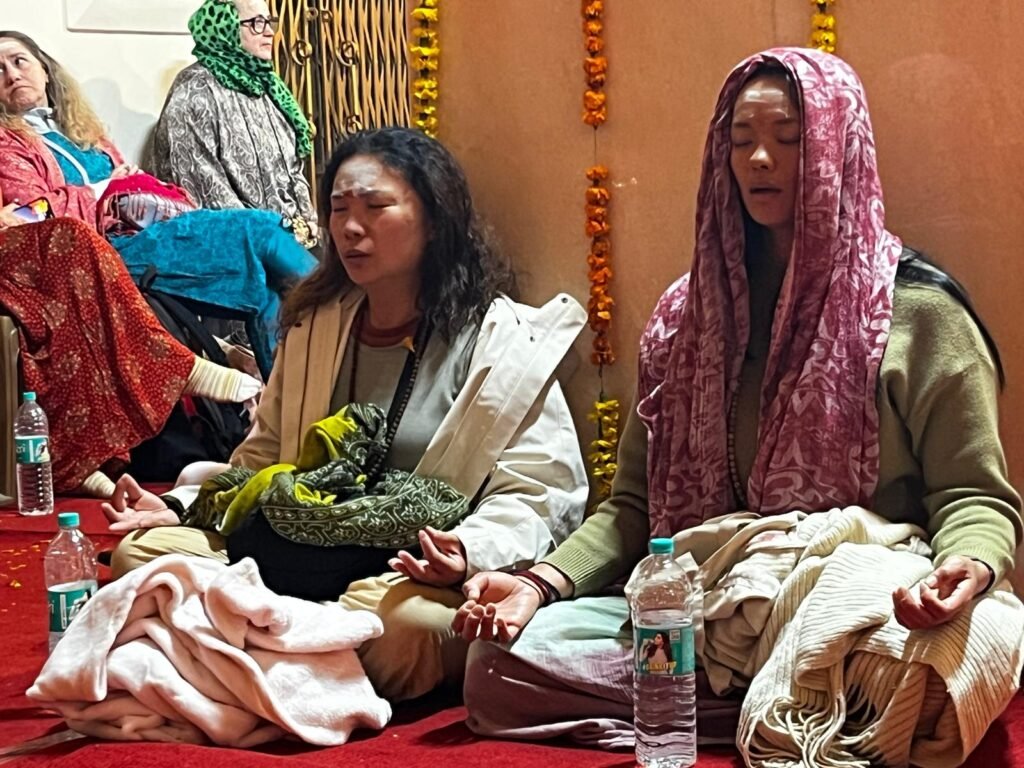
Group leaders can adjust the itinerary, but the spirit stays the same: practice, reflection and spiritual excursions in that order of priority.
The daily routine of a 14-day spiritual yoga retreat settles the nervous system
Most people are exhausted both from their work and their constant decision-making. A retreat removes many decisions. You wake, practise, eat simply, rest, practise again, and sit in satsang. This routine is one of the biggest benefits of a 14-day spiritual yoga retreat.
You may notice:
- Sleep becomes deeper and more regular
- Digestion becomes lighter when meals are simple and timed well
- The breath becomes slower and less forced
- The mind becomes less scattered because your day has one direction
A traditional routine is not strict to punish you. It is strict to empower you.
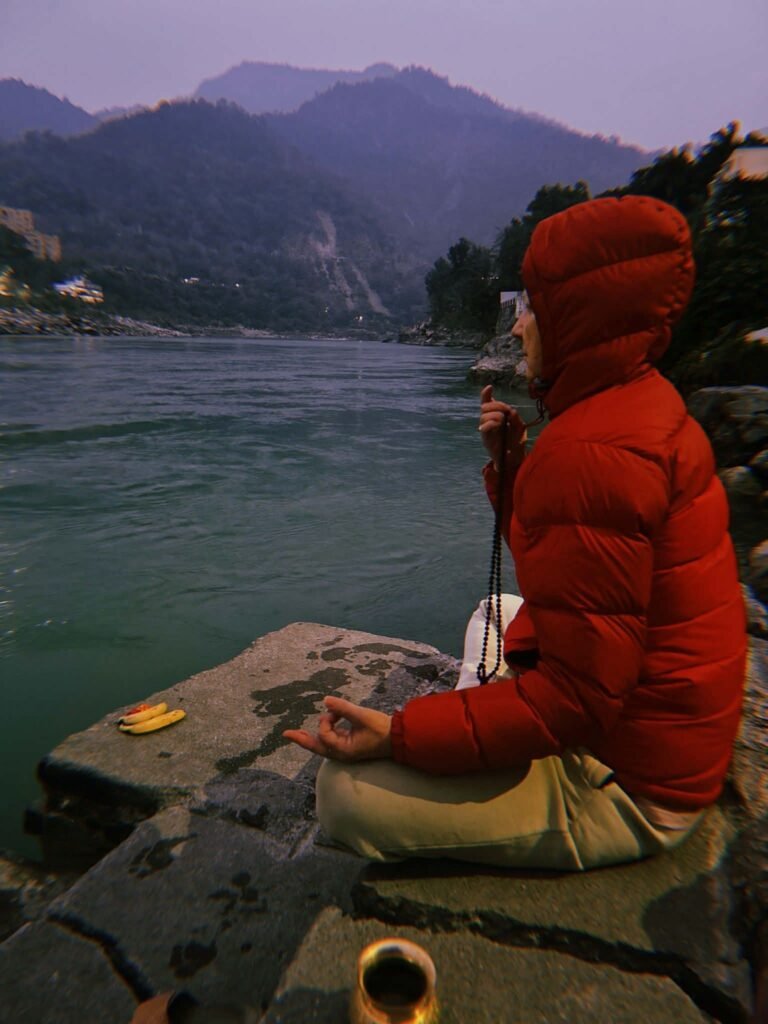
Hatha yoga as preparation for meditation
Hatha yoga is often treated as fitness, but on this retreat, you start to see it as preparation for meditation. Your posture becomes the foundation for your stability, patience, and awareness.
As you practise daily, you learn the difference between effort and strain. The point is to align your physical, mental and energy bodies through physical alignment in the postures, breathing with the movement, and bringing the mind into every aspect of the practice. You also become aware that the ego that wants to perform, compare, and rush. Over the course of 14 days, the body becomes steadier, and sitting becomes easier.
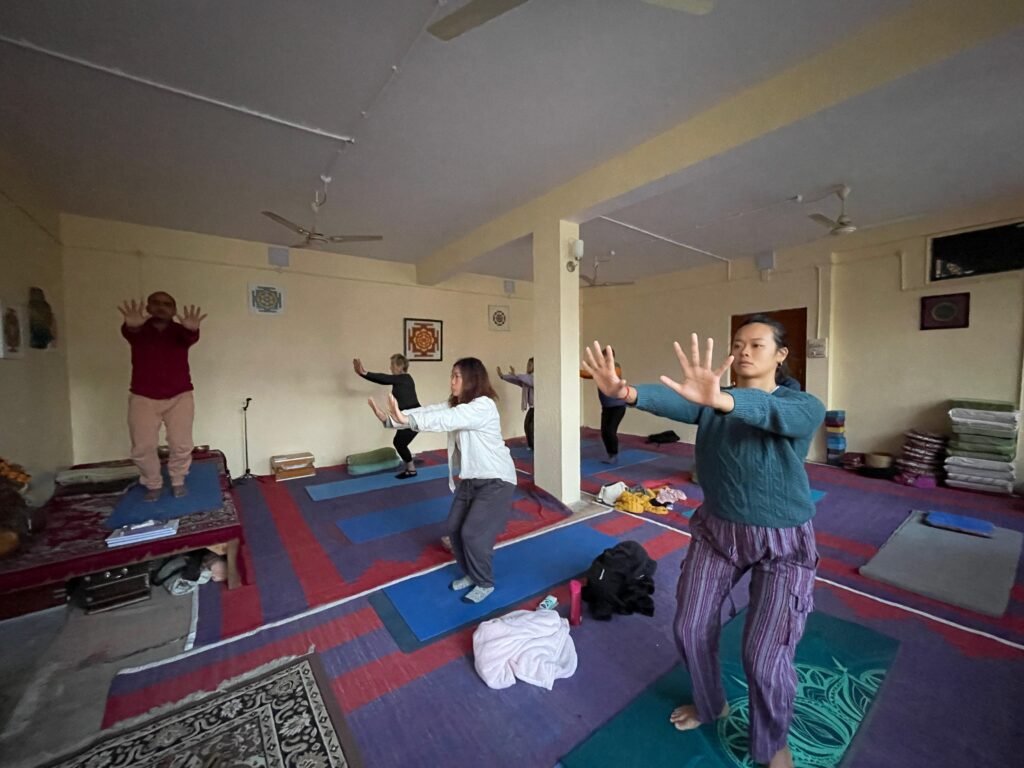
Kriya and pranayama refine your life-force
Many students arrive with strong mental activity and weak breathing. They live in their head, not with the breath. Pranayama and kriya help bring you back to your centre.
The breath and mind move together. When the breath is disturbed, the mind is disturbed, but when the breath is smooth, the mind becomes quieter. Over two weeks, you learn to observe:
- Which breathing patterns make you restless
- How food, caffeine, late nights, and constant talking disturb practice
- How silence, early sleep, and a clean routine support practice
You do not need to believe in energy to feel the effects. You feel it as clarity, stability, and a quieter inner space.
Practising the basics leads to meditation
Many people say they “cannot meditate”. Often, it is because the body cannot relax, the breath is irregular, and the mind is overstimulated. A retreat systematically helps train the conditions for meditation.
When body, breath, and mind begin to align, sitting becomes more natural. You start to notice the gap between a thought and your reaction to it. That gap is freedom. It is not dramatic, it is real; but you have to practice awareness to notice it.
Meditation is not a means of escape. It is seeing reality. You sit, observe, and stop feeding unnecessary mental noise.
Mantra and kirtan open the heart
The mind is trained by repetition. It repeats worries, opinions, and old stories. However, mantra is a practical tool that gives the mind repetition of a higher order. It is pure sound.
In a 14-day spiritual yoga retreat, mantra is not a performance. It is a method to shift the mind from scattered thinking to one-pointedness. When you chant with awareness, you may notice:
- Thoughts slow down without force
- Emotions soften because the heart has opened
- You feel connected to the group without needing to explain yourself
Kirtan also teaches humility. You are not trying to impress anyone. You are practising devotion and fellowship.
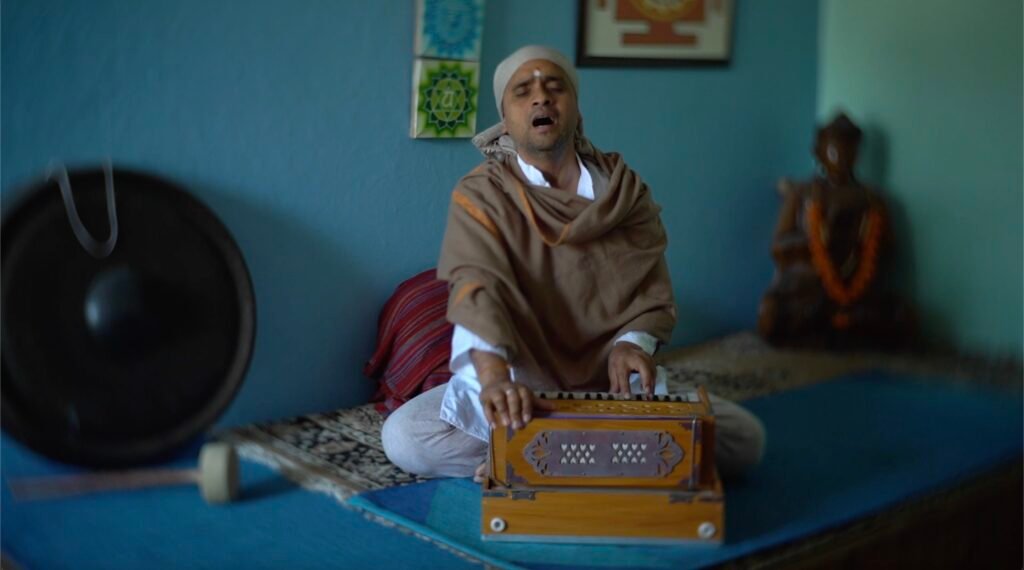
Satsang gives you clear direction
Without understanding, your practice becomes mechanical; understanding without practice is simply theory. Satsang brings these two aspects together.
In satsang, you hear teachings in plain language. You ask practical questions: how to maintain discipline, how to work with doubt, how to face emotions that arise during practice, and how to take yoga home. A good retreat does not overload you with information. It gives you the next step you can actually do.
Sacred places during a 14-day spiritual yoga retreat support inner work
Rishikesh is full of sacred energy, but the benefit depends on your approach. Only by adopting a meditative mind can these sacred places become a mirror for you to see your true self.
A simple walk to a quiet riverbank can become a strong practice. A visit to Vashishta Cave can teach you how quickly the mind resists silence. Aarti can remind you that devotion is focus with love. These experiences help you understand that yoga is a living discipline, not a modern lifestyle trend.
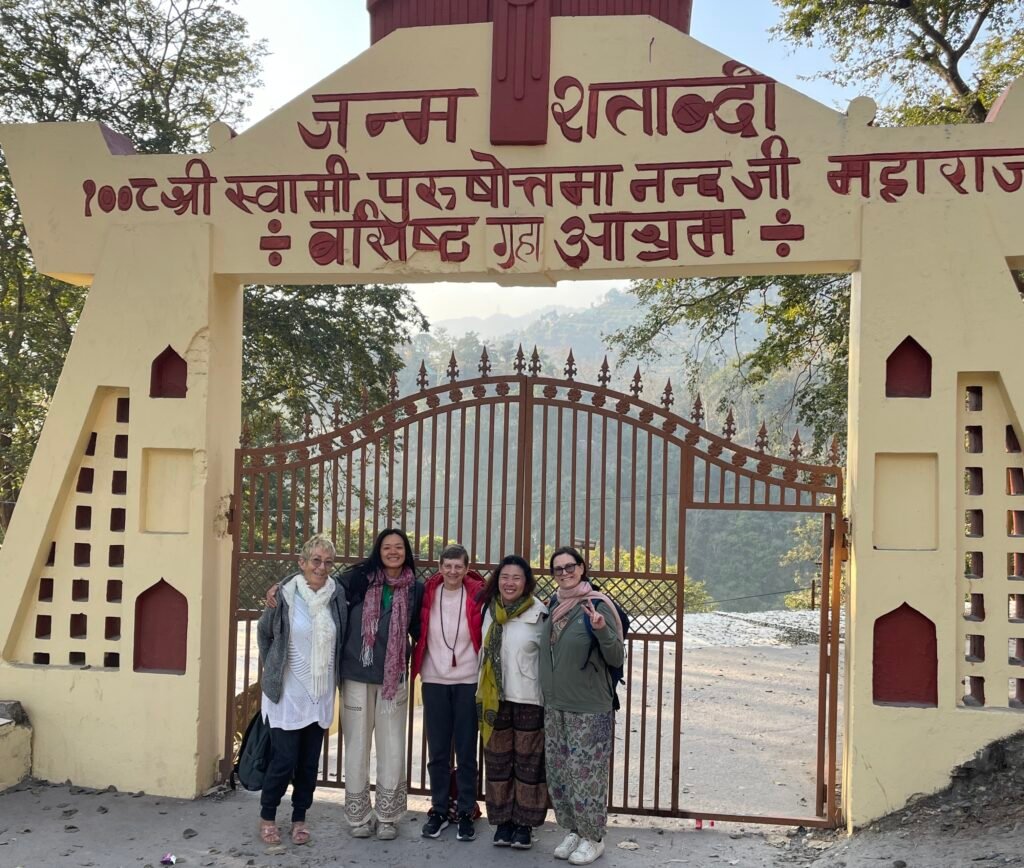
Vedic rituals as living spiritual experience
Participation in Vedic rituals, such as Shivratri, can be a turning point for the retreat. The specific rituals can often lift you out of your comfort zone.
The one-pointedness exercised during these celebrations can help you see your habits more clearly and how much energy is available when you stop wasting it. Many people report that after participating in Vedic rituals, their meditation becomes deeper and their mind less dissipated.
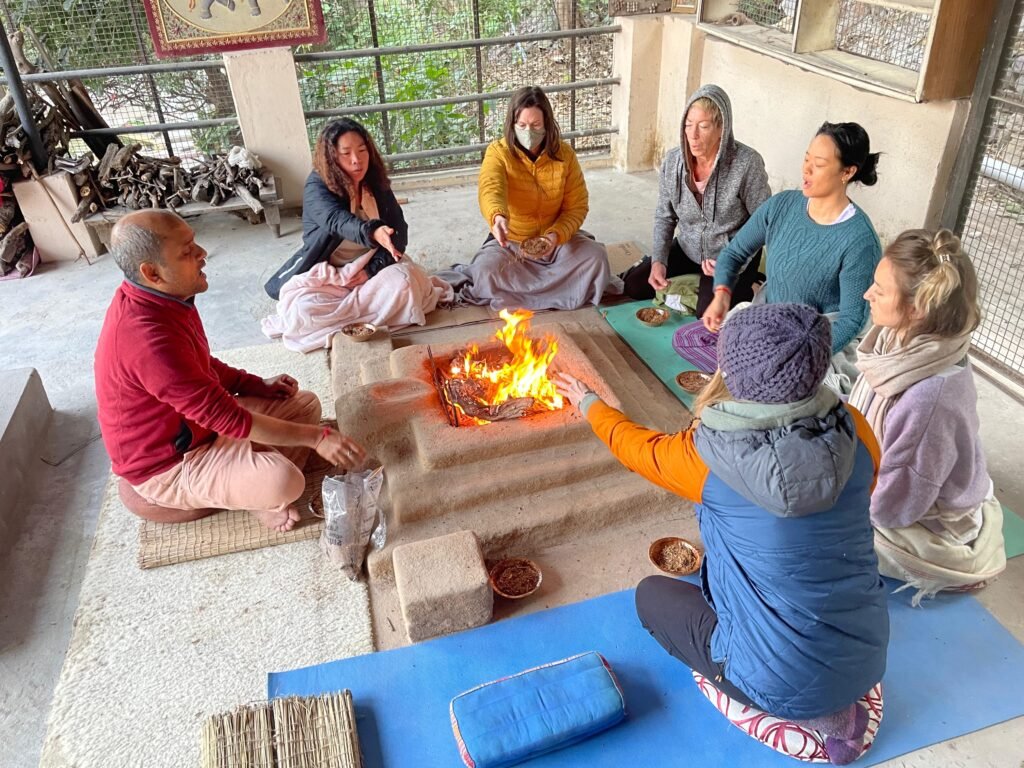
Community supports practice
On this retreat, you get to practise with others who share the same intention, making discipline a little easier. You learn from each other’s effort, at the same time acknowledging everyone’s struggles with the mind. In the traditional approach, community matters because it helps keep you consistent.
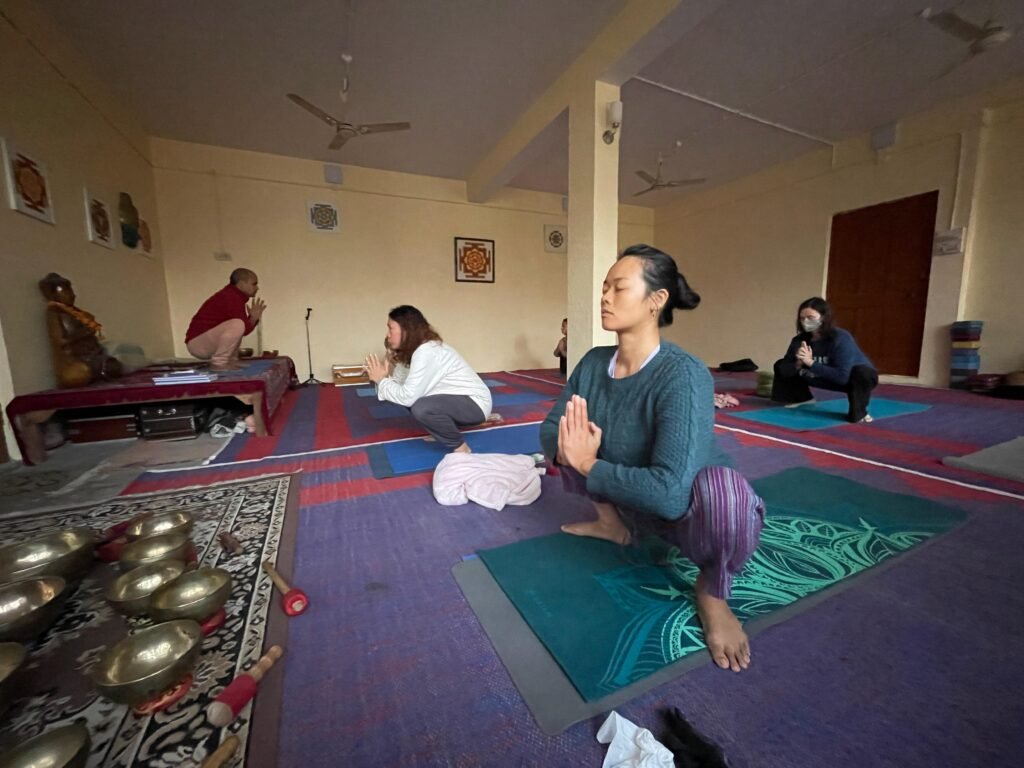
A retreat also creates the right environment for seva (selfless service), even in small ways: helping, cleaning, supporting others, and doing your part without expecting any acknowledgement.
Rest and simple living lead to clarity
Many visitors come with years of accumulated fatigue. They have not truly rested because their “rest” still includes screens, noise, and mental work.
A retreat offers early nights, less stimulation, and time without constant input, allowing clarity of mind to arise. Simplicity is not deprivation. It is the saving of your energy. When you live simply, you discover contentment without the need to constantly seek stimulation.
Ayurveda therapy to complement the retreat
Yoga and Ayurveda have always worked together. A retreat becomes stronger when you also promote digestion, sleep, and recovery.
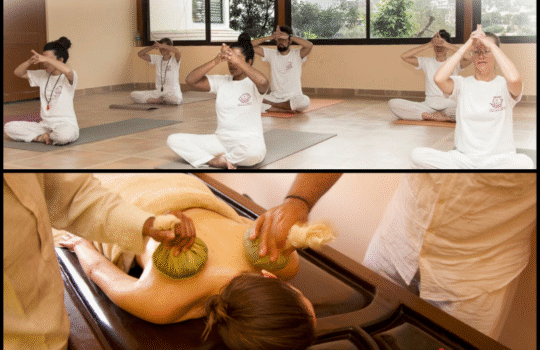
Most groups include at least one Ayurvedic treatment in their itinerary. This is not a luxury add-on. It helps the body release tension and supports the nervous system, allowing pranayama and meditation to go deeper.

You can find all of our Ayurveda treatments and prices here.
A sample itinerary of a 14-day spiritual yoga retreat
A recommended structure includes morning hatha yoga, late afternoon kriya sessions, evening kirtan and satsang, and carefully chosen outings that support contemplation and devotion.
A sample retreat may include:
- A welcome and exit healing fire ceremony
- Daily morning hatha yoga and afternoon kriya practice
- Regular philosophy and applied yoga discussions
- Riverbank meditation and self-analysis walks
- Visits to sacred spaces such as Vashishta Cave
- Aarti at a traditional ashram
- A day trip to Dev Prayag and Chandrabadni Divine temple
- Sunrise meditation at Kunjapuri
- A simple Ayurveda cooking class
- At least one Vedic celebration (such as Holi, Maha Shivratri, Dipawali, etc.)
- One Ayurvedic treatment before departure
- Adequate rest time
Group leaders can shape the days, but this kind of structure upholds the retreat’s purpose.
How benefits of a 14-day spiritual yoga retreat carry back to daily life
A retreat is successful when you can live differently once you return home.
The most lasting benefits are practical:
- You know how to practise even when you do not feel motivated
- You recognise your mental habits sooner, so they do not control you as much
- You understand that discipline is support, not harshness
- You value silence and so reduce unnecessary noise
- You have a clear routine you can repeat: asana, breath, mantra, and stillness
Even 15–20 minutes each day, done consistently, can preserve the retreat’s effect.
Practical preparation for a 14-day spiritual yoga retreat
Before you arrive, reduce caffeine and late nights so your breath and sleep stabilise. Begin 10 minutes of quiet sitting each day, even if the mind is noisy. Choose one simple intention (sankalpa): why are you coming?
During the retreat, keep phone use to a minimum, eat what supports practice, and rest when needed. After you return, keep the morning routine alive for at least 40 days. Consistency reinforces what you gained.
To learn how previous students have experienced yoga retreats at the Vedic Yoga Centre, see our YouTube testimonials.
Common challenges you work through on retreat
Two weeks of steady practice will bring up your habit patterns. This is normal and a part of the benefit. You may experience restlessness, mood swings, doubt, or a strong urge to “do something else”. The retreat teaches you to simply watch these feelings.
You learn to stay with the breath when the mind wants drama. You learn to return to the practice without argument. You should also balance your effort with time out, and not push the body when it is asking for rest. Over time, experiencing peace becomes a skill. If you approach the discomfort with patience, you return home with determination – not just memories.
Closing reflection
A 14-day spiritual yoga retreat is a decision to live differently for a short time so you can live better for a long time. If you come with an open heart, you will not only learn practices – you will learn how your mind works, how your breath guides you, and how discipline leads to freedom.
When you return home, keep it simple. Practise a little every day. Let the retreat continue through your consistency, your choices, and your determination.
Individuals can simply slot into the programs on offer at the time they come, while groups are able to create an itinerary that is most beneficial to the greatest number of participants. You can find all the details of our yoga retreats here.