
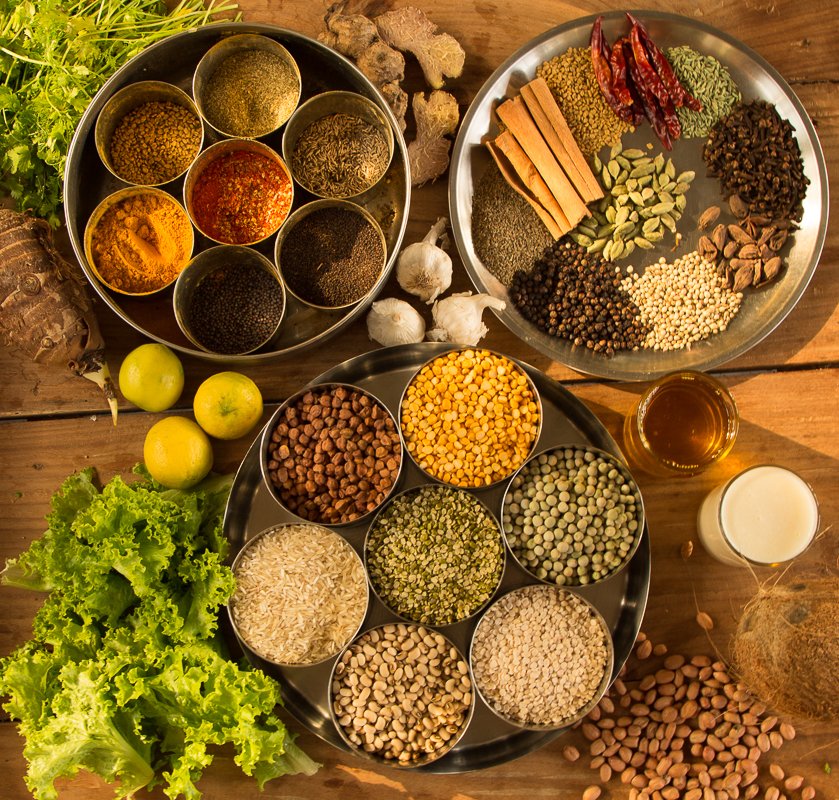
Why use herbs and spices?
Ayurveda teaches that balance does not come from force or excess. Instead, it comes through daily, thoughtful choices that support your natural constitution. Among these choices, the use of Ayurveda herbs and spices for doshas is one of the most important. When used correctly, they improve digestion, stabilise the mind, and align you with spiritual clarity.
More than just a medicine, Ayurvedic herbs and spices gently guide you back towards harmony when used consistently and with awareness. Therefore, understanding which herbs and spices support each dosha—Vata, Pitta, and Kapha—becomes a spiritual responsibility.
This guide explains which Ayurveda herbs and spices are appropriate and how to use them realistically in daily life.
Understanding herbs and spices in Ayurveda
In Ayurveda, herbs and spices are not selected for their flavour. They are chosen for their guna (qualities), virya (heating or cooling effect), and vipaka (post-digestive effect). Together, these influence digestion, energy flow, and mental stability.
In addition, spices play an important role in supporting agni, the digestive fire. When agni remains balanced, clarity of mind naturally follows. Conversely, when digestion weakens, confusion, heaviness, or irritability often arise.
Therefore, Ayurvedic cooking becomes a form of sadhana. Each meal is seen as an opportunity to observe, adjust, and cultivate awareness.
Specific applications for balancing each dosha
1. Vata dosha
Vata governs movement, communication, and nervous system activity. When balanced, it supports creativity, adaptability, and clarity. However, when aggravated, it leads to anxiety, dryness, irregular digestion, and scattered thinking.
Since Vata is cold, light, and dry by nature, it requires warmth, grounding, and stability. Herbs and spices for Vata must therefore be warming, moistening, and gently stimulating.
Recommended herbs and spices for Vata
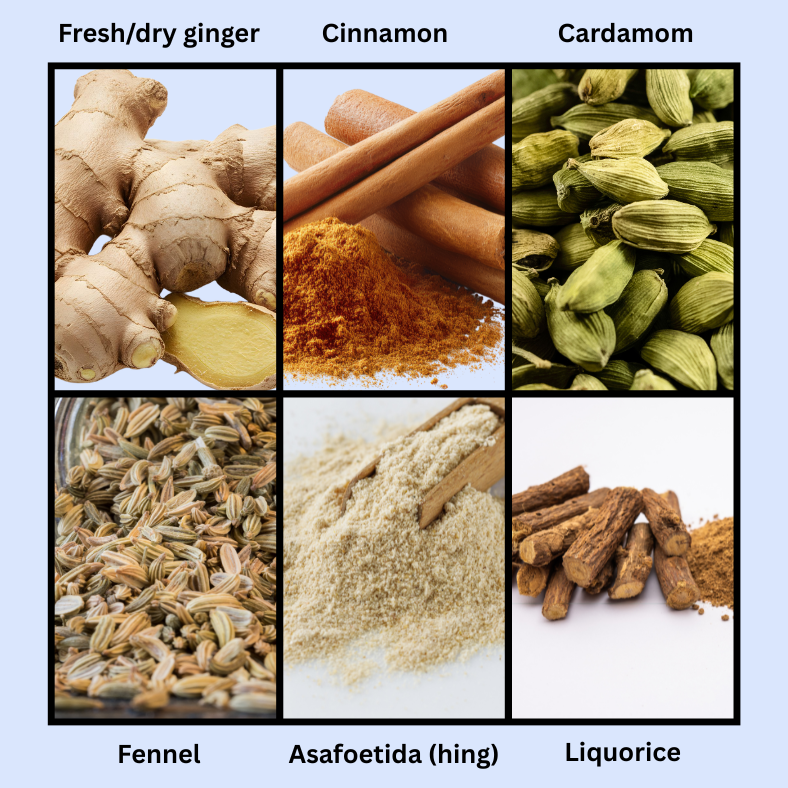
- Ginger (fresh and dry) – Warms digestion, reduces bloating, calms nervous tension
- Cinnamon – Improves circulation and stabilises erratic energy
- Cardamom – Aids digestion without overheating
- Fennel – Reduces gas while soothing the digestive tract
- Asafoetida (hing) – Powerful for Vata-related bloating and constipation
- Liquorice – Nourishes tissues and calms the mind
Practical daily application
Use Vata-balancing spices consistently but moderately. For example, begin the day with warm water infused with ginger and fennel. Likewise, adding hing (asofoetida) and cumin to lentils helps prevent gas and dryness.
For a deeper rest at night, drink warm milk with cardamom and a pinch of nutmeg. These simple, realistic practices can be maintained without effort or excess.
Spiritual benefits for Vata types
When Vata becomes balanced, the breath deepens, and focus becomes more steady. Consequently, meditation becomes less of an effort. The mind reduces the tendency to jump between thoughts, making inner silence more accessible. Therefore, herbs and spices for Vata indirectly support inner stillness by calming movement at its source.
2. Pitta dosha
Pitta governs transformation, metabolism, and discernment. When balanced, it underpins intelligence, courage, and clarity. However, when aggravated, it leads to irritability, inflammation, acidity, and excessive judgement.
Because Pitta is hot, sharp, and penetrating, it requires cooling, calming, and softening influences.
Recommended herbs and spices for Pitta
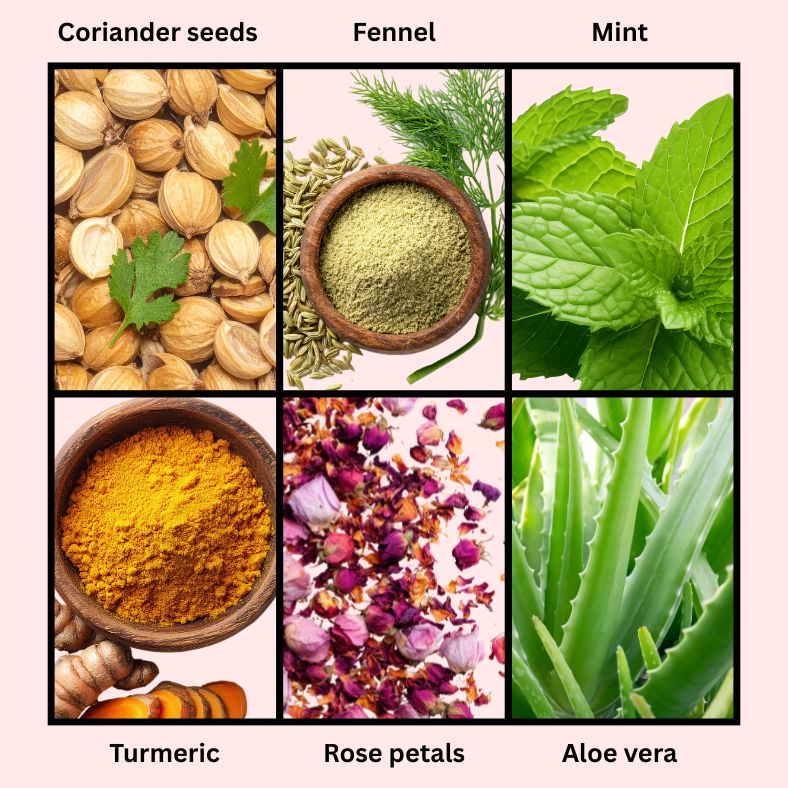
- Coriander seeds – Cooling, digestive, and calming to the liver
- Fennel – Reduces heat and acidity
- Mint – Cools the system and calms emotional intensity
- Turmeric – If used moderately, purifies the blood while remaining balanced between the doshas
- Rose petals – Calm the emotions and support heart balance
- Aloe vera – (internal use wen appropriate) – Reduces inflammation
Practical daily application
For Pitta, spices should be used lightly and consciously. The simple concoction of coriander and fennel tea after meals helps prevent acidity, while small amounts of turmeric support digestion without increasing heat.
During warmer months, cooling infusions such as rose or mint tea help stabilise both digestion and mood. These practices fit easily into any routine.
Spiritual benefits for Pitta types
As Pitta cools the body, so judgement softens. This allows humility and patience to develop naturally. Meditation becomes less driven and more receptive. Therefore, herbs and spices that calm Pitta also support surrender—an essential aspect of spiritual maturity.
3. Kapha dosha
Kapha governs structure, stability, and endurance. When balanced, it provides compassion, strength, and steadiness. However, when aggravated, it leads to lethargy, congestion, attachment, and reluctance to embrace change.
Since Kapha is heavy, cold, and slow, it requires stimulation, warmth, and lightness.
Recommended herbs and spices for Kapha
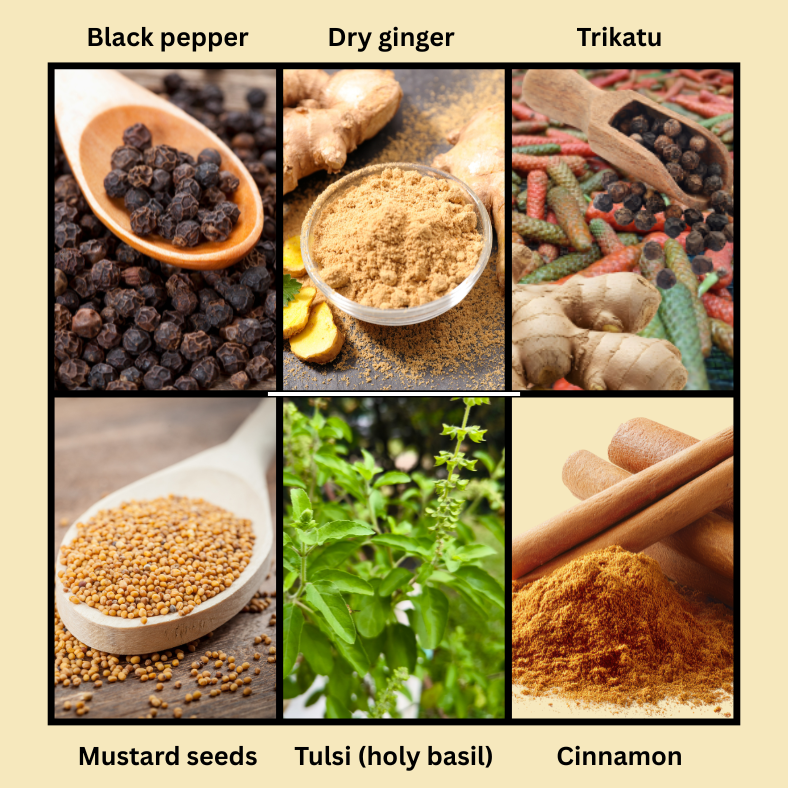
- Black pepper – Stimulates digestion and clears congestion
- Dry ginger – Reduces heaviness and improves metabolism
- Mustard seeds – Strongly heating and clearing
- Trikatu (ginger, black pepper, long pepper) – Revives digestive fire
- Tulsi (holy basil) – Clears respiratory stagnation and uplifts the mind
- Cinnamon – heats without aggression; complements black pepper, ginger and trikatu by countering cold, damp and lethargy
Practical daily application
Kapha benefits from using spices generously, especially in the morning. For example, ginger tea upon waking prevents sluggish digestion, while adding black pepper and mustard seeds to vegetables increases lightness.
Importantly, Kapha types should avoid excessive sweet or oily preparations, even when using spices.
Spiritual benefits for Kapha types
As Kapha lightens, attachment loosens. Energy begins to move upward rather than settling downward. Consequently, motivation for practice returns, and awareness sharpens. Herbs and spices for Kapha, therefore, support detachment and clarity.
Using herbs and spices as a spiritual discipline
In Ayurveda, consistency matters more than intensity. As with your yoga practice, herbs and spices do not work through occasional use but through daily application coupled with awareness.
Moreover, when you cook consciously, you cultivate patience and attentiveness. Over time, this transforms eating into a meditative act. Therefore, herbs and spices support sadhana through integrating awareness into everyday life rather than isolating sadhana to just your yoga mat.
Common mistakes when using Ayurvedic herbs and spices
While herbs and spices are beneficial, misuse reduces their value. Common errors include:
- Using too many spices at once
- Following recipes without considering one’s constitution
- Overheating Pitta or drying Vata unintentionally
- Treating spices as quick remedies rather than daily supports
Balance requires observation. Therefore, you must notice how your body and mind respond over time.
Integrating herbs & spices with yoga and meditation practice

Herbs and spices work best when combined with regular yoga, pranayama, and meditation practices. For instance, warming spices support morning practice, while cooling herbs and spices assist evening meditation.
Likewise, digestive clarity improves posture stability and breath control. Over time, this alignment strengthens both physical and inner development.
How herbs & spices are used at the Vedic Yoga Centre, Rishikesh
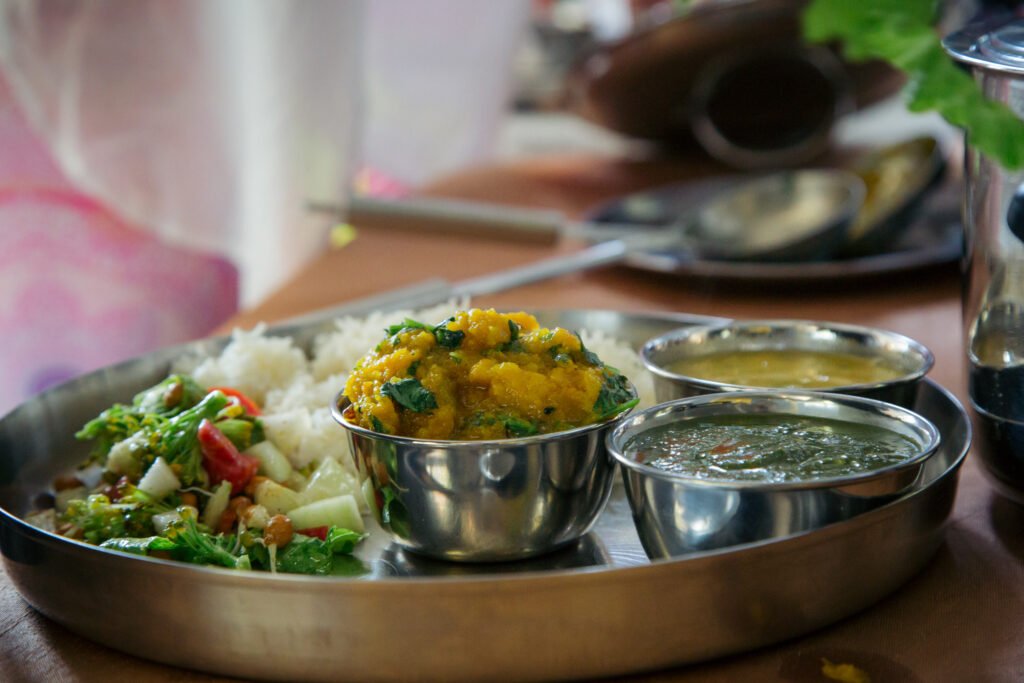
At the Vedic Yoga Centre, a wide range of herbs and spices is used in everyday cooking to support the general well-being of all our guests. However, during our Panchakarma (detox) programs, meals are prepared specifically according to Ayurvedic principles, using dosha-appropriate spices to support digestion, elimination, and nervous system balance.
Foods are freshly cooked, simple, and intentionally spiced to awaken agni (digestive fire) without overstimulation. This approach reduces digestive strain, allowing energy to be directed towards healing and inner practice rather than processing heavy or unsuitable food. As a result, guests often notice greater lightness in the body, improved breath awareness, and increased steadiness during yoga and meditation. By aligning diet with individual constitution, we support the body’s natural cleansing process while creating the right conditions for deeper yoga practice and mental clarity.
For those seeking a detox program (Panchakarma) to improve health and well-being, please visit our website to learn more about this therapy, which uses the herbs and spices discussed in this post. Our Panchakarma packages also include daily morning and afternoon yoga classes that support the detox process. You can watch our YouTube playlist to catch up on some testimonials from previous guests who have experienced the benefits of Panchakarma.
Seasonal considerations at the Vedic Yoga Centre
In the Himalayan foothills around Rishikesh, seasonal changes are felt strongly in both climate and energy:
- Winters are cool and dry, increasing Vata and requiring warmth, regularity, and grounding foods
- Summers bring heat and intensity, which increase Pitta and call for cooling, soothing meals and spices.
- During late winter and spring, humidity and heaviness can increase Kapha, often causing slow digestion and congestion if the diet is not adjusted.
At the Vedic Yoga Centre, meals and herbal preparations are adapted according to these seasonal shifts. Spices are adjusted gradually rather than abruptly, helping guests remain balanced while continuing daily yoga, pranayama, and meditation. This seasonal awareness reduces strain on the body and supports steadiness in practice, even as external conditions change. Ayurveda herbs and spices for doshas
| Season (Indian context) | Dominant dosha influence | Common imbalances | Supportive herbs and spices | Practical application |
| Spring (Vasanta) | Kapha accumulates and aggravates | Heaviness, congestion, lethargy | Dry ginger, black pepper, mustard seed, trikatu, tulsi | Light meals, stimulating spices, warming teas to clear stagnation |
| Summer (Grishma) | Pitta accumulates due to heat | Acidity, irritation, inflammation | Coriander, fennel, mint, rose, small amounts of turmeric | Cooling teas, mildly spiced foods, avoidance of excess chilli and sour tastes |
| Monsoon (Varsha) | Vata aggravates; agni weakens | Poor digestion, bloating, fatigue | Ginger, cumin, ajwain, fennel, hing (asafoetida) | Simple warm meals, digestive teas, spices added early to stabilise agni |
| Autumn (Sharad) | Pitta aggravates after monsoon | Skin issues, anger, heat in the system | Coriander, fennel, turmeric, rose | Gradual cooling diet, cleansing yet nourishing foods |
| Winter (Hemanta/Shishira) | Vata increases due to cold and dryness | Dryness, joint pain, restlessness | Ginger, cinnamon, cardamom, nutmeg, sesame-based spices | Warm, nourishing meals, grounding spices, regular eating times |
By adopting this seasonal approach, herbs and spices are used intelligently, in response to the environment and the individual. When diet follows seasonal intelligence, the body can adapt, digestion stays strong, and the mind remains fit for inner work.
Final reflection
Ayurvedic herbs and spices are not separate from spiritual life. They complement it through digestion, mental clarity, and overall balance. When used daily and thoughtfully, they help stabilise the body and calm the mind, enabling inner work to unfold naturally.
You may wish to begin by observing your digestion, energy, and emotional tendencies. From there, choose one or two spices and use them consistently. Over time, this simplicity will show you its power through your increased balance and awareness.