Why we need Ayurvedic cooking
Ayurveda cooking is about preparing food in a way that supports balance in the body, steadiness in the mind, and clarity in daily life. Traditionally, food was not seen as separate from well-being but as part of one’s healing, routine, and self-care.
Today, many people eat in a rushed and distracted way. As a result, the body becomes burdened, the mind becomes restless, and daily life loses rhythm. Therefore, Ayurveda cooking offers something practical and deeply relevant. It helps you return to simplicity, observe what supports your system, and reminds you that cooking can become a conscious practice rather than another habit done without awareness.
At the same time, Ayurveda does not reduce health to food alone. Vedic teaching makes it clear that food should be combined with right living, yoga, and meditation. It should be viewed holistically. When food is used as medicine, it can be very supportive. However, it works best when it is part of a broader life of awareness. For this reason, Ayurveda cooking is not just a diet trend. It is a way of bringing awareness, care, and balance into everyday life.
The simple approach is to learn what makes you feel lighter, calmer, and more balanced, then keep doing it.
What is Ayurveda cooking?
Ayurveda cooking is the traditional Indian preparation of food that supports balance, digestion, energy, and mental clarity. Rather than focusing only on calories or taste, it considers freshness, the effect of ingredients on your system, the use of spices, the state of mind while cooking, and the condition of the person eating.
In simple words, Ayurveda cooking asks: “Does this food help bring balance to everyone involved in the process, or does it create more disturbance?”
This is why Ayurvedic cooking remains useful in today’s world. It teaches you to observe rather than blindly follow, with awareness rather than compulsion. It also teaches that the way food is prepared matters just as much as what is on your plate.
Why Ayurveda cooking matters in modern life
In modern life, many are disconnected from the basics of health. People eat quickly, eat late, snack unconsciously, and rely too much on stimulation. Consequently, digestion becomes strained, and the mind becomes less steady. Over time, this affects our sleep, mood, clarity, and energy.
Ayurveda cooking matters because it restores order from disorder. It brings rhythm back into food habits, and encourages meals that nourish instead of overload the system. It also brings your awareness back to the present by making cooking and eating a part of your daily practice.
This is especially important when you are under stress. Ayurvedic teachings identify that stress is commonly linked with living unconsciously. When the mind is constantly caught in regrets of the past or worries about the future, one’s whole system becomes disturbed. Therefore, your food should help settle the system, not further stimulate it.
That is why Ayurveda cooking tends to value:
- fresh food
- simple preparation
- balanced use of spices
- regular meal times
- awareness while cooking and eating
These are not dramatic principles. Nevertheless, they are powerful because they work through daily repetition.
Food as medicine in Ayurveda
One of the clearest principles in Ayurveda is that food can be used as medicine. This does not mean every meal should feel clinical or restrictive. It means that ordinary ingredients, when used with understanding, can support healing in natural ways.
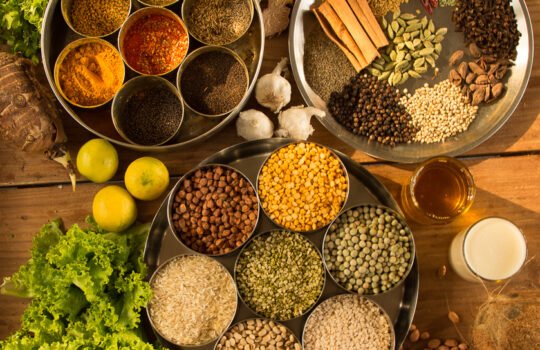
For example, Ayurveda considers ingredients such as garlic, turmeric, cumin, black pepper, and coriander to be valuable when used properly. It also explains that a helpful ingredient used in the wrong quantity, at the wrong time, or in the wrong condition may create more imbalance rather than less.
This is why the traditional approach is careful. It respects balance and observation. It respects the difference between food that supports and food that overstimulates.
In practical terms, food as medicine means:
- using ingredients for their effect, not only for flavour
- choosing easily digestible meals
- minimising foods that agitate the system
- preparing food with care and simplicity
- paying attention to how you feel after eating
Rather than just offering recipes, Ayurvedic cooking is about building a more intelligent relationship with food, your body, and your daily energy.
The connection between food, stress, and energy
Ayurveda sees a close relationship between food and your inner condition. Poor food habits make your energy less grounded. In addition, when your system is already weak, consuming heavy or overstimulating food makes things worse. On the other hand, changing your diet towards fresher, more pranic foods can help stabilise your energy.
This is especially relevant for people dealing with stress. Fresh food leads to better-quality energy. Simple meals place less burden on the body, while overly stimulating food can increase restlessness rather than relieve it.
This is one reason Ayurveda cooking can be so useful for modern people. It does not only ask what tastes good, but it also asks what helps the whole system settle.
If you are often tense, hurried, or mentally overloaded, it may help to observe whether:
- your meals are fresh or stale
- you are overeating
- you are eating while distracted
- your food leaves you clear or heavy
- your spices are supportive or excessive
This kind of observation is part of the healing process. It helps you take responsibility for what you put into your system.
Ayurveda cooking and the quality of the mind
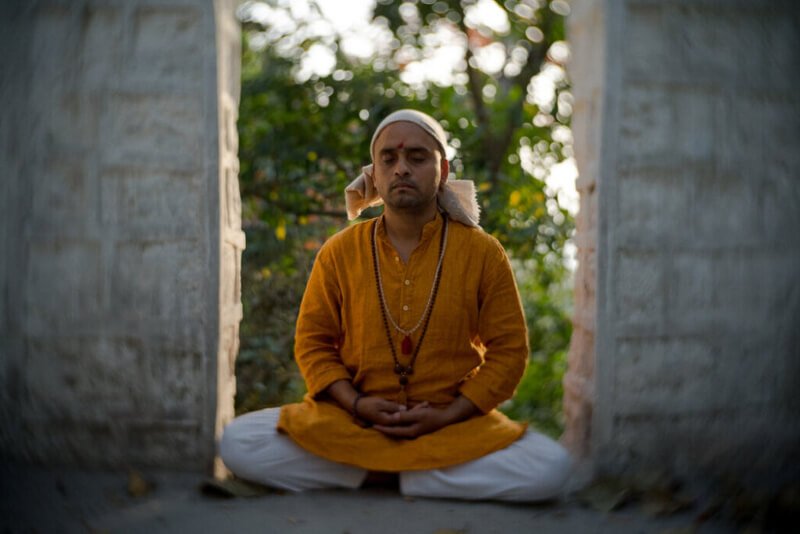
In yogic understanding, food influences both the body and mind. Some foods stimulate, some create dullness, while others create more calmness and clarity. Therefore, Ayurveda cooking is closely related to your inner life.
You can see this clearly in your own experience. After certain meals, the mind feels cloudy, passive, or agitated. After simpler and fresher meals, the mind usually feels clearer and more settled. This is not just theory. It is something you can observe directly through your own experience.
Ayurvedic teaching also reminds us not to turn this into ego. The aim is not to become proud of what you eat. The aim is to become aware of what supports your peace and your practice.
Sattvic cooking and inner balance
A useful idea in yogic food culture is the sattvic quality of food. When food is Sattvic, it supports peace, lightness, steadiness, and clarity. It creates less disturbance on the nervous system and tends to support inward practices such as meditation, breath awareness, prayer, and reflection.
However, sattvic cooking should not be treated as a label. Ayurvedic teaching makes it clear that the real aim is inner connection. If food helps create a more peaceful and balanced state, then it serves a purpose. But if it becomes another source of pride or division, the point is lost. For this reason, food should be regarded with humility by both those preparing it and those consuming it.
A simple sattvic approach usually includes:
- freshly prepared meals made from living ingredients
- moderate seasoning
- food that feels clean and digestible
- balanced rather than extreme flavours
- a calm attitude while eating
Therefore, sattvic cooking is best understood as a practical aid to steadiness.
Why fresh food matters in Ayurveda
Freshness is repeatedly valued in traditional lifestyle teaching because fresh food carries more life and creates less stagnation. When food has been sitting too long, processed too heavily, or prepared without care, it usually loses its beneficial quality.
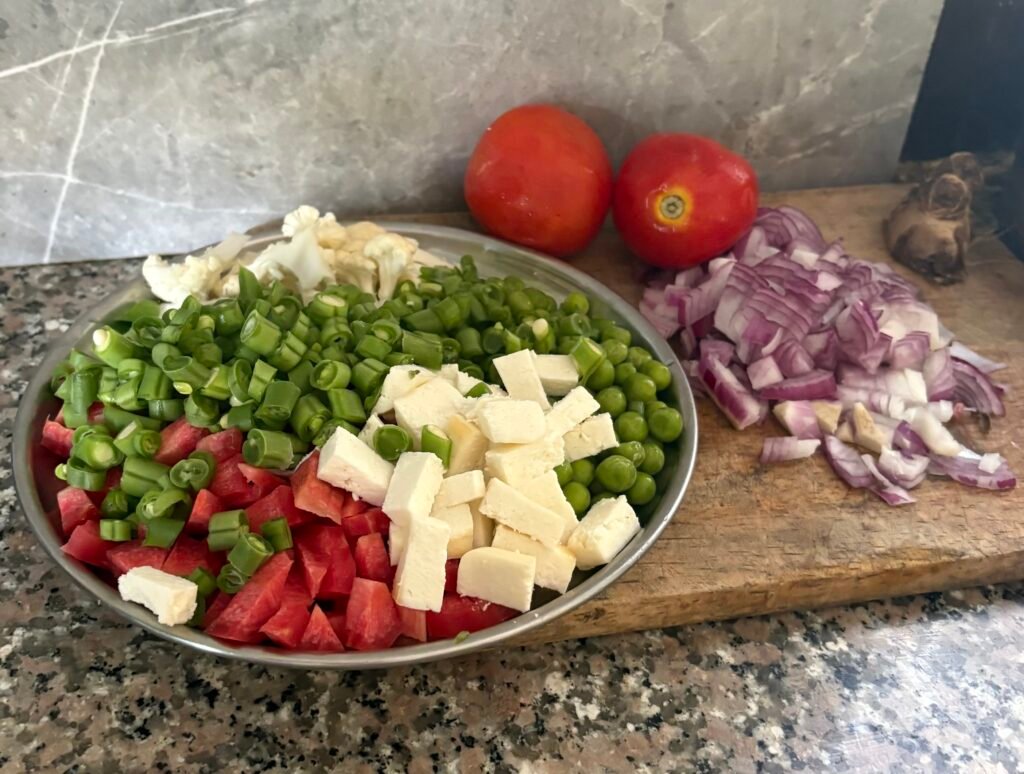
Digestion is also easier when consuming fresh foods, as the body can generally process them more easily than food that is overly preserved, reheated repeatedly, or made only for stimulation.
This does not mean becoming rigid. It means freshness should be respected whenever possible. Useful examples of fresher choices may include:
- simple cooked vegetables
- freshly prepared lentil dishes
- seasonal fruit
- light salads when suitable
- meals made on the day rather than kept too long
The principle is simple: choose food that still feels alive, clean, and suitable for your condition, including your personal wellbeing and the appropriate season.
The role of spices in Ayurveda cooking
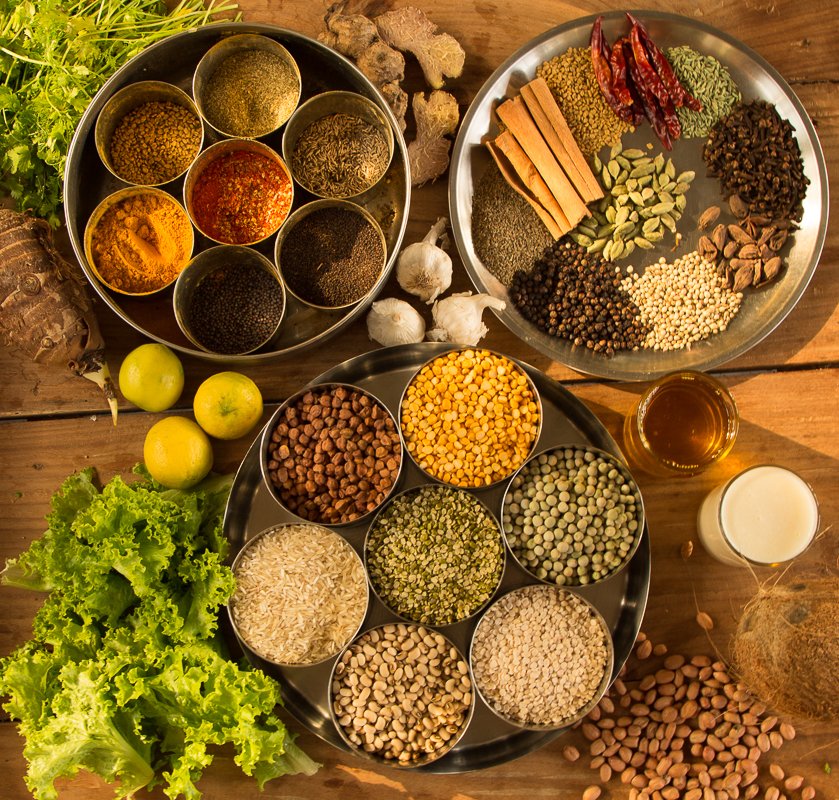
Spices are among the most misunderstood parts of Ayurveda cooking. Many people think Ayurvedic spices are just there to make food taste exotic. But spices are used to support specific functions: they help warm, move, settle, or stimulate depending on how they are used.
At the same time, Ayurveda is not interested in excess. If a spice is used without understanding, it can disturb the very system you are trying to support. Commonly respected spices in Ayurveda cooking include:
- turmeric
- cumin
- coriander
- ginger
- black pepper in moderation
- garlic in appropriate situations
The important point is not memorising a list. The important point is understanding why you are using something. The ancient tradition would always ask, “Are you using it to support the meal, or only to excite the senses?”
Greater detail on the specific spices appropriate for each Ayurvedic body type (vata, pitta or kapha) can be found in our blog Ayurveda Herbs and Spices to Balance the Doshas.
Ayurveda cooking as part of daily sadhana at the Vedic Yoga Centre
Ayurveda cooking becomes much more meaningful when approached as part of daily sadhana. Sadhana means conscious practice. Meals at the Vedic Yoga Centre are prepared on the basis that they form part of this sadhana. Here, we want you to focus on your yoga practice or Ayurvedic treatment while enjoying the benefits of healthy, nutritious Ayurvedic food without the effort needed to cook it yourself. Many of our guests comment on how the food they have consumed during their stay makes them feel lighter and better able to sleep, and this inspires them to adopt this new way of eating once they have returned home.
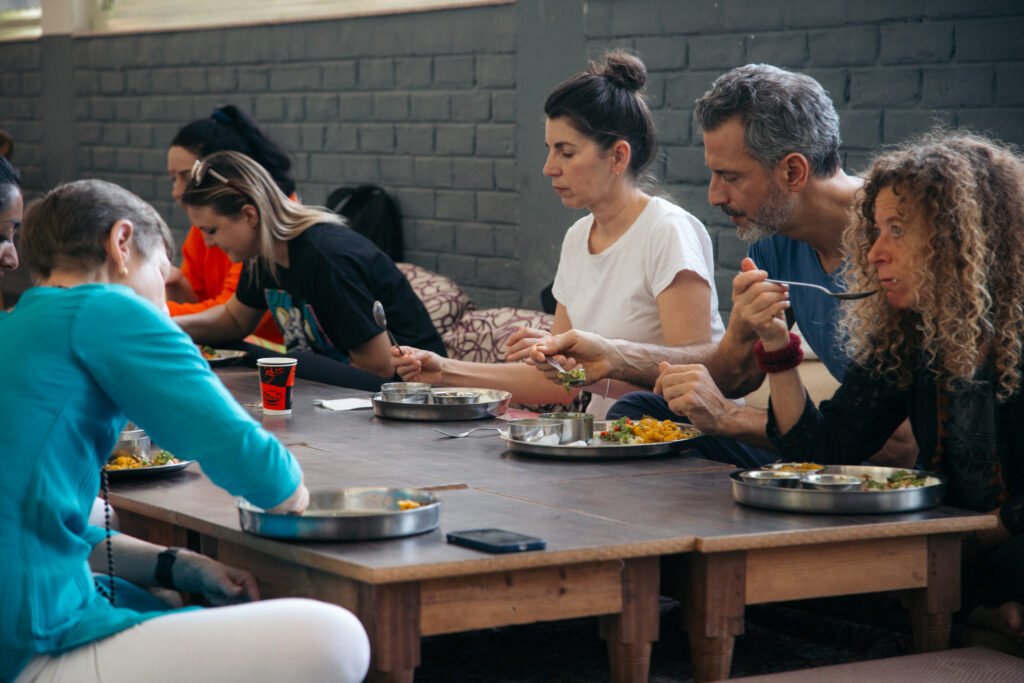
Once you have experienced Ayurvedic cooking you will want to include it in your daily practice. In fact, since cooking is such an ordinary and regular task, it is a great place to start. You do not need a special setting. You only need attention.
Cooking as sadhana may include:
- keeping the kitchen clean
- beginning in a settled state
- preparing food without needless rush
- staying present at every step
- offering gratitude before eating
These simple acts can change the quality of daily life. Instead of moving through the kitchen mechanically, you begin to participate more consciously in the process. Over time, this influences the mind itself.
Therefore, Ayurveda cooking is not only about nutrition but also about teaching patience, balance, order, and awareness.
How to start Ayurveda cooking at home
Begin the process of Ayurveda cooking at home with what is realistic. Don’t try to change everything at once. Start building this new habit gradually.
Start with one conscious meal
Choose one meal each day and prepare it with more awareness. Keep the meal simple and notice how you feel afterwards.
Use a few spices properly
Begin with two or three supportive spices, such as cumin, coriander, and turmeric. Learn how they affect the meal and how they affect you.
Eat fresher food
Reduce stale, overly processed, and excessively stimulating food where you can. Bring in more fresh and simple meals instead.
Create more rhythm
Try to eat at regular times. Rhythm helps digestion, and proper digestion leads to overall balance.
Sit down and eat properly
Do not eat while hurrying, scrolling, or thinking of ten other things. Eating with awareness is part of Ayurveda.
This is enough for a sound beginning. You do not need perfection. You need steadiness.
Simple benefits of Ayurveda cooking
The benefits of Ayurveda cooking are not usually loud or immediate. They are often quiet, steady, and cumulative – which is exactly why they matter.
With time, many people notice:
- a lighter feeling after meals
- more regular digestion
- less heaviness and dullness
- more grounded energy
- a calmer relationship with food
- greater support for yoga and meditation
These small changes, repeated daily, have real power in developing deeper balance.
A practical daily routine for Ayurveda cooking
If you want a simple routine, this may help:
- Begin the day with warm water and a calm start
- Keep breakfast simple and suitable for your appetite
- Make lunch your main balanced meal when possible
- Avoid constant unconscious snacking
- Keep dinner lighter and easier to digest
- Leave some space between dinner and sleep
- Prepare food with care rather than rushing through it
This routine is not a strict law. It is a practical structure. It brings more order into the day, which supports both mind and body.
Ayurveda cooking works best with yoga & meditation
The ancient teachings are clear on this point: food alone is not enough. Ayurveda cooking is deeply supportive, but for best results, it should be combined with a regular yoga practice and meditation. This is because healing is not only physical. The body, breath, mind, and awareness all influence one another.
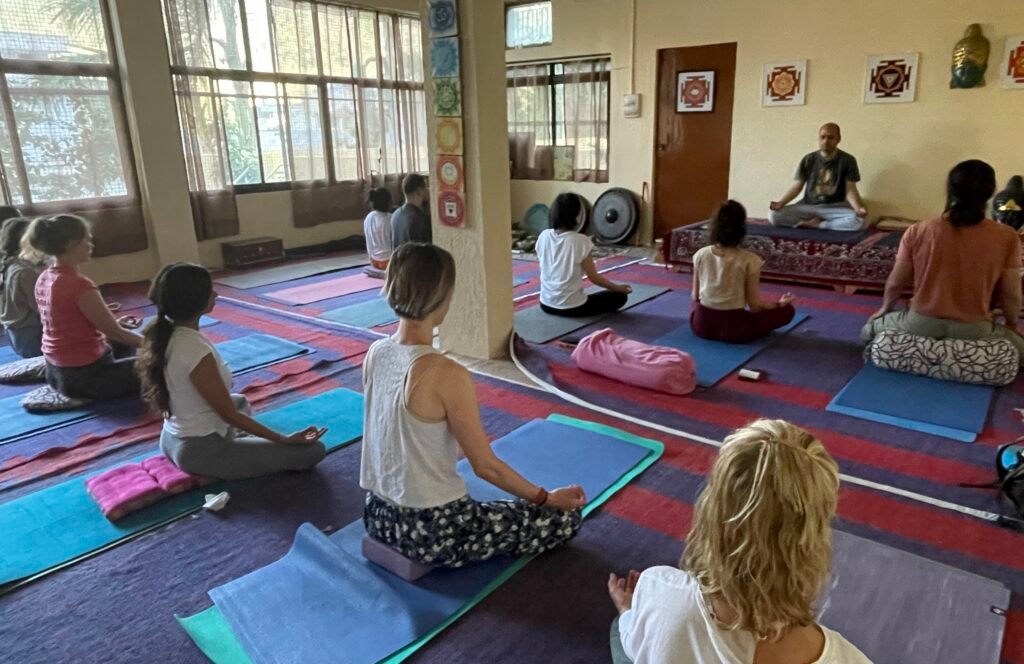
Therefore, the kitchen is one part of the path, but not the whole of it.
When fresh food, balanced spices, yoga, and meditation work together, the result is more complete. You feel balanced from several directions at once. This is why the traditional approach remains so practical. It does not isolate one area of life. It is a holistic science that works with every aspect of an individual’s life.
Final reflection
If you are a beginner, you will not find Ayurveda cooking complicated. Its strength lies in simplicity, observation, and daily consistency. You begin to cook with more awareness, eat with more respect, and notice which foods help you feel clearer, steadier, and more balanced.
This is where real understanding begins.
If you want healing, begin in ordinary life. Begin in the kitchen. Begin with one meal prepared with care. Use food as support, not as escape. Eat with awareness, then let the practice deepen gradually.
Ayurveda cooking is not only about food. It is about how you live.
Discover Ayurvedic cooking at the Vedic Yoga Centre, Rishikesh
Come and stay with us at the Vedic Yoga Centre in Rishikesh, India. Here, we include your meals as part of your accommodation and stay, with our family members preparing every meal according to Ayurvedic wellness principles. You can combine your stay with an Ayurvedic detox program (Panchakarma), Stress Management program, or a 7 or 14-day Yoga Retreat.
If you want to gain deeper insight into Ayurvedic cooking, you can come specifically to participate in our Ayurvedic Cooking Course, which itself is combined with a yoga and meditation practice. Here is a playlist of reviews from guests who have had a cooking experience at the Vedic Yoga Centre in Rishikesh.
For further information on Ayurvedic meals at the Vedic Yoga Centre, you can contact us using the details in the footer.